The Christmas Card: A Victorian Invention That Became a Ritual
By Ephemera Crafts Atelier
•
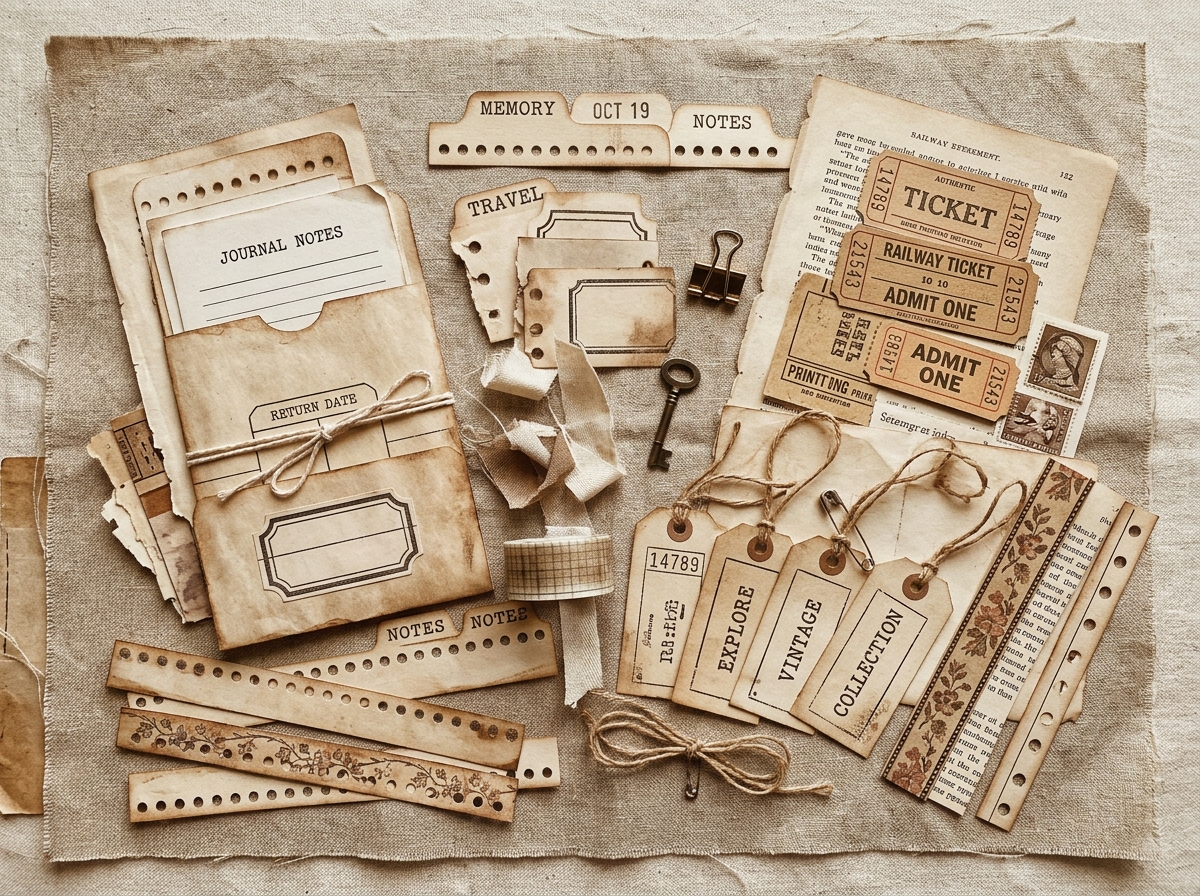
A small piece of paper that turned a holiday into a yearly obligation — and a yearly archive.
Every December, millions of people perform the same small ritual: choose a card, write a message, address an envelope, add a stamp, send it. The ritual feels ancient, but it is not. The commercial Christmas card is a Victorian invention, a product of cheap printing and cheap postage — and it became one of the most enduring forms of holiday ephemera.
## The 1840s: a card for a new kind of Christmas
In the 1840s, Britain was transforming the way it sent mail. Postal reform made sending letters and cards cheaper and more accessible, while commercial printing made illustrated paper affordable. The Christmas card emerged from that combination: a printed greeting, sent like a letter, that could carry an image as well as a message. The story credits the first commercial Christmas card to Henry Cole and his collaborators in the 1840s — a detail worth mentioning with the caveat that "first" claims in print history are always a little slippery.
Early cards were not always the snowy, sentimental scenes we expect. Some carried surprisingly secular imagery — feasting, drinking, children, theatrical scenes — reflecting a Victorian Christmas that was as much about sociability and commerce as about piety. The modern idea of the holiday was being invented, and the card was part of the invention.
## Cheap postage, mass market
As printing improved and postal rates fell, Christmas cards moved from a novelty for the wealthy to a mass custom. Chromolithography brought saturated colour; embossing, gilding and die-cutting added luxury; publishers competed on novelty and sentiment. By the early twentieth century, the Christmas card was a staple of the season, with designs ranging from religious imagery to humour, landscapes, children, animals and patriotic motifs.
Postcards played a parallel role: a cheaper, faster format that carried Christmas greetings in enormous quantities. Real photo postcards let families send their own images; printed cards carried the era's visual language of the holiday.
## The twentieth century: charity, studio cards and photographs
The twentieth century added new layers. Charity cards turned the ritual into fundraising; studio cards brought humour and modern graphic design; photo cards made the family itself the image. Mid-century cards often reflect the optimism and domesticity of their moment, while later decades experiment with typography, foil, glitter and pop-up mechanisms.
Each era left a distinct material signature: the weight of the card, the printing process, the palette, the way the greeting is phrased. For collectors, these signatures are as informative as the image.
## Why Christmas cards are collected
* **Design history:** illustration styles, typography and printing techniques in miniature;
* **Social history:** what people wished each other, and how they phrased it;
* **Artists and publishers:** named illustrators, series and publisher imprints;
* **Nostalgia:** cards often survive because they were kept for emotional reasons;
* **Accessibility:** abundant, varied and relatively affordable compared with many antiques.
> **Collector's note:** Glitter, foil and adhesive decorations shed and stain; store cards individually in acid-free sleeves and avoid stacking glittered cards face-to-face. Postmarks and handwritten messages often add more value than pristine blank cards — they prove the card was used.
## Christmas cards in junk journals
The format is ideal for holiday spreads: thin enough to layer, large enough to be a page, and printed on both sides. A few ways to use them:
* **As a tip-in:** attach by one edge so the message inside can still be read;
* **As a pocket:** glue three edges and use the card front as a seasonal pocket;
* **As a palette source:** let the card's reds, greens and creams set the tones for the spread;
* **As a family archive:** pair a card with a photo and a line about the year it was sent;
* **As a reproduction:** scan and reprint favourite cards on matte stock for everyday journaling.
Keep the palette muted — aged cream, deep green, oxblood, tarnished gold — and the spread will read as vintage rather than festive kitsch. Our [ephemera collections](/category/ephemera/) and [free printables](/free-printables/) include pieces that sit naturally beside old cards.
## A ritual worth keeping
The Christmas card survives because it does something digital messages cannot: it arrives as an object, carries handwriting, and stays on a mantelpiece for weeks. It is also a tiny annual archive — a dated, signed, designed record of who was in your life that year. Send one this December; keep one from someone you love. In fifty years, it will be the kind of paper this whole craft is built on.
---
*More seasonal history: <a href="/blog/halloween-ephemera/">Halloween ephemera</a> · <a href="/blog/evolution-of-the-postcard/">the evolution of the postcard</a> · <a href="/blog/victorian-calling-cards-ephemera/">Victorian calling cards</a>.*