Ephemera & History • 6 min read
Halloween Ephemera: From Victorian Postcards to Die-Cut Decorations
No holiday consumed paper more eagerly — and no holiday left less of it behind.
In-depth guides on printing 300 DPI digital ephemera, distressing paper, vintage bookbinding, and junk journal composition.
No holiday consumed paper more eagerly — and no holiday left less of it behind.
You are surrounded by ephemera every day. Most of it goes in the bin before you have read it.
Most old photographs can be placed within a few decades without any specialist equipment — if you know where to look.
Recipes, not rules: nine compositions that remove the blank-page problem and still leave room for your hand.
Every journal has pages you would rather not look at. They are not failures — they are information.
A collection name has two jobs: make someone feel something, and help them find you again.
Junk journaling runs on rescued paper. But every cut page raises a question the craft rarely asks out loud.
The edges of a book are where readers stop being passive — and start talking back.
One kit, five finished spreads — and a method you can repeat with any collection.
A small piece of paper that turned a holiday into a yearly obligation — and a yearly archive.
The most elaborate love tokens of the nineteenth century were made of paper — and some of them were gloriously rude.
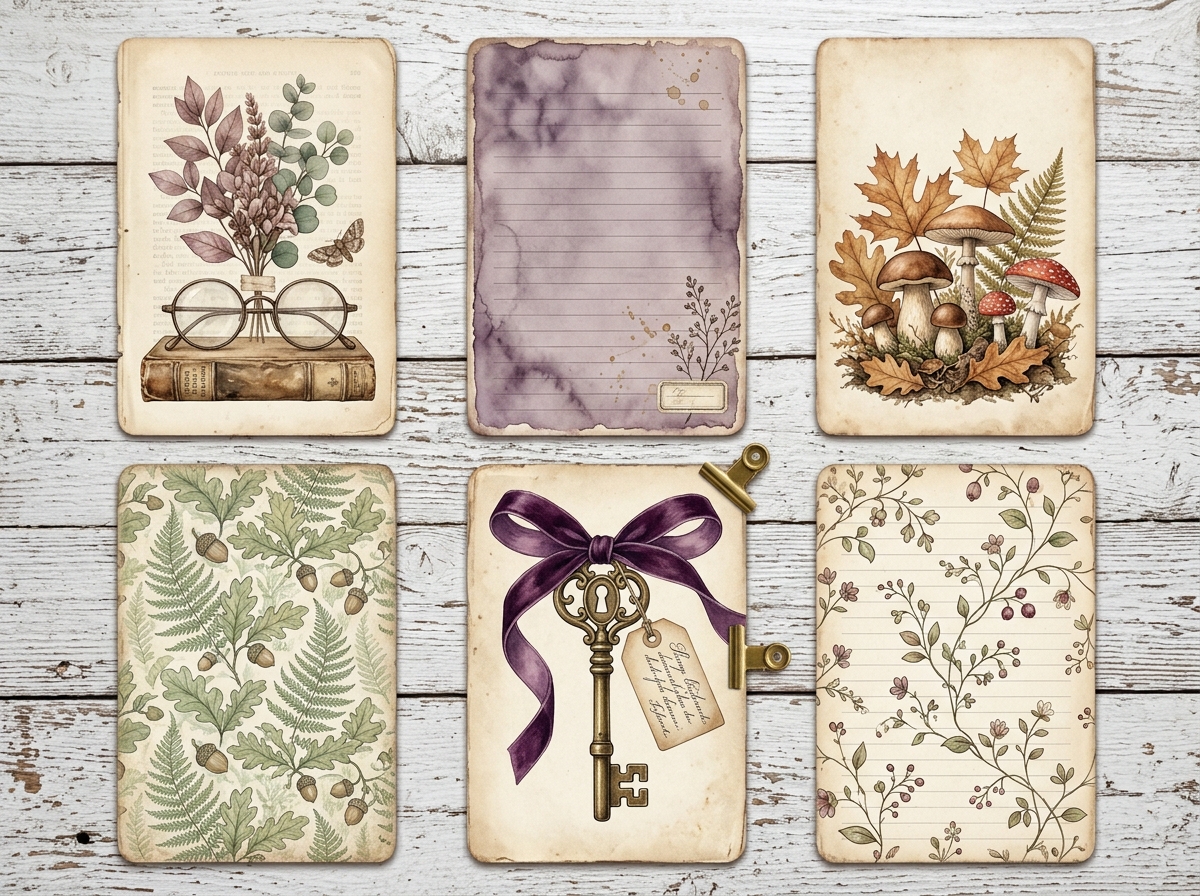
A wedding produces a paper trail: an invitation, a menu, a programme, a place card. Together they are a portrait of taste, money and family.
A postcard is not one document. It is five, layered on two sides of card.
The scent of an old book is chemistry you can smell — and occasionally a warning you should heed.
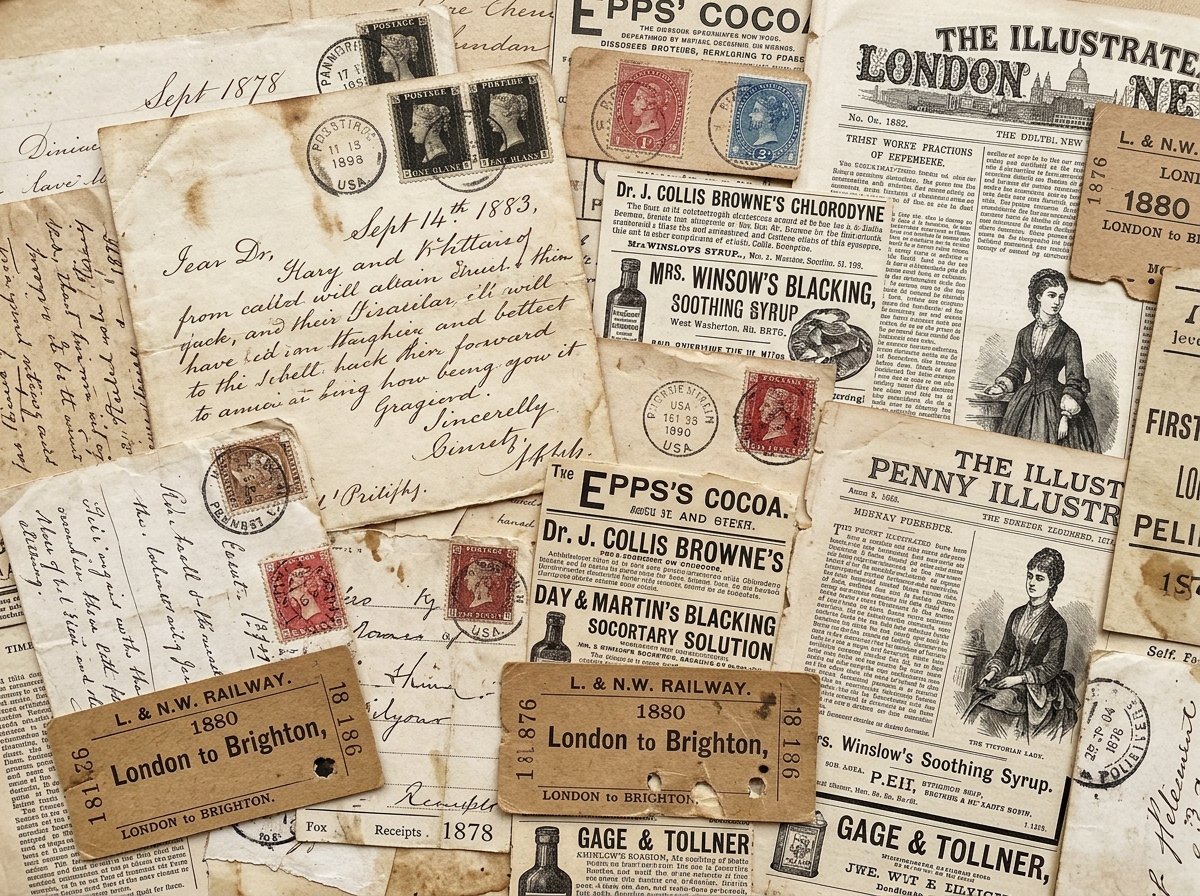
A lot is only a bargain if most of it is usable. Here is how to tell before you pay.
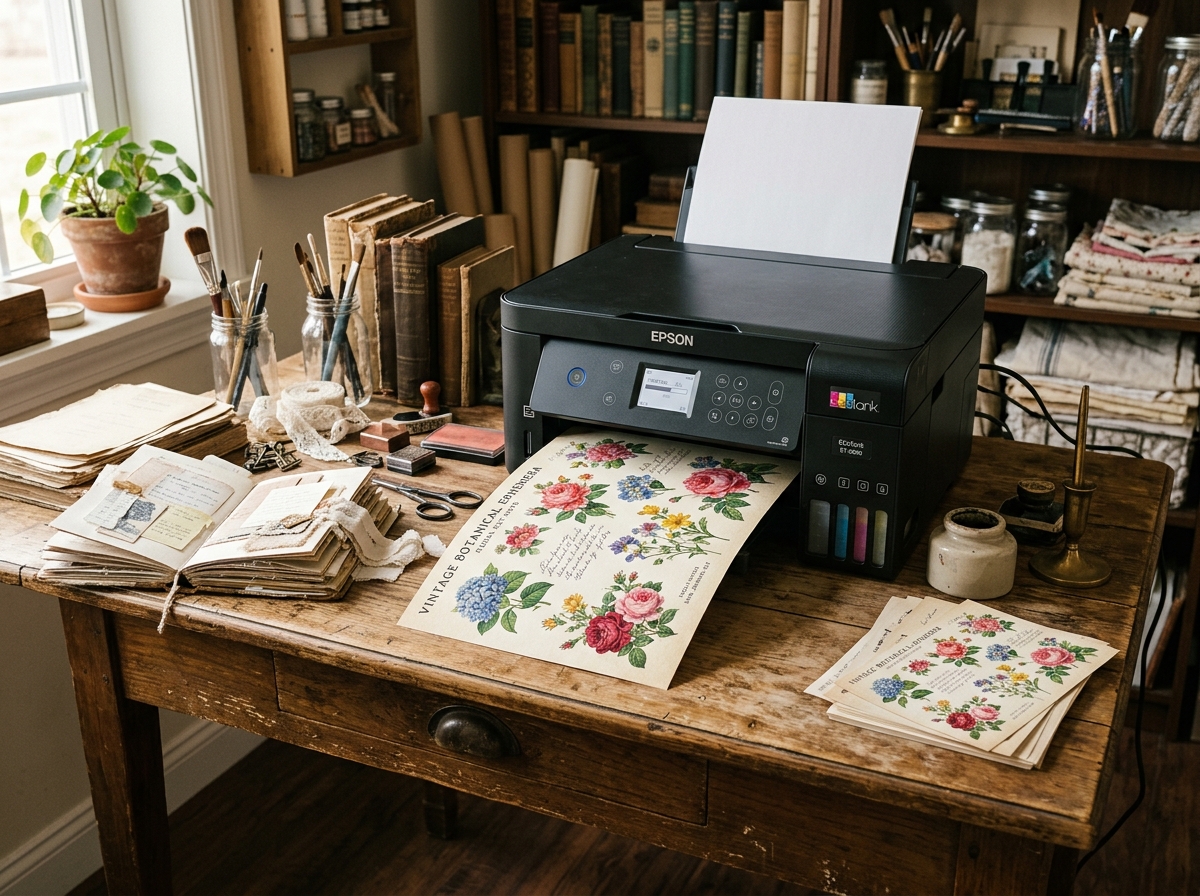
A coherent collection does not need a designer's colour theory. It needs one good source image and a disciplined selection.
The best journal pages are not the busiest. They are the ones that reward attention.
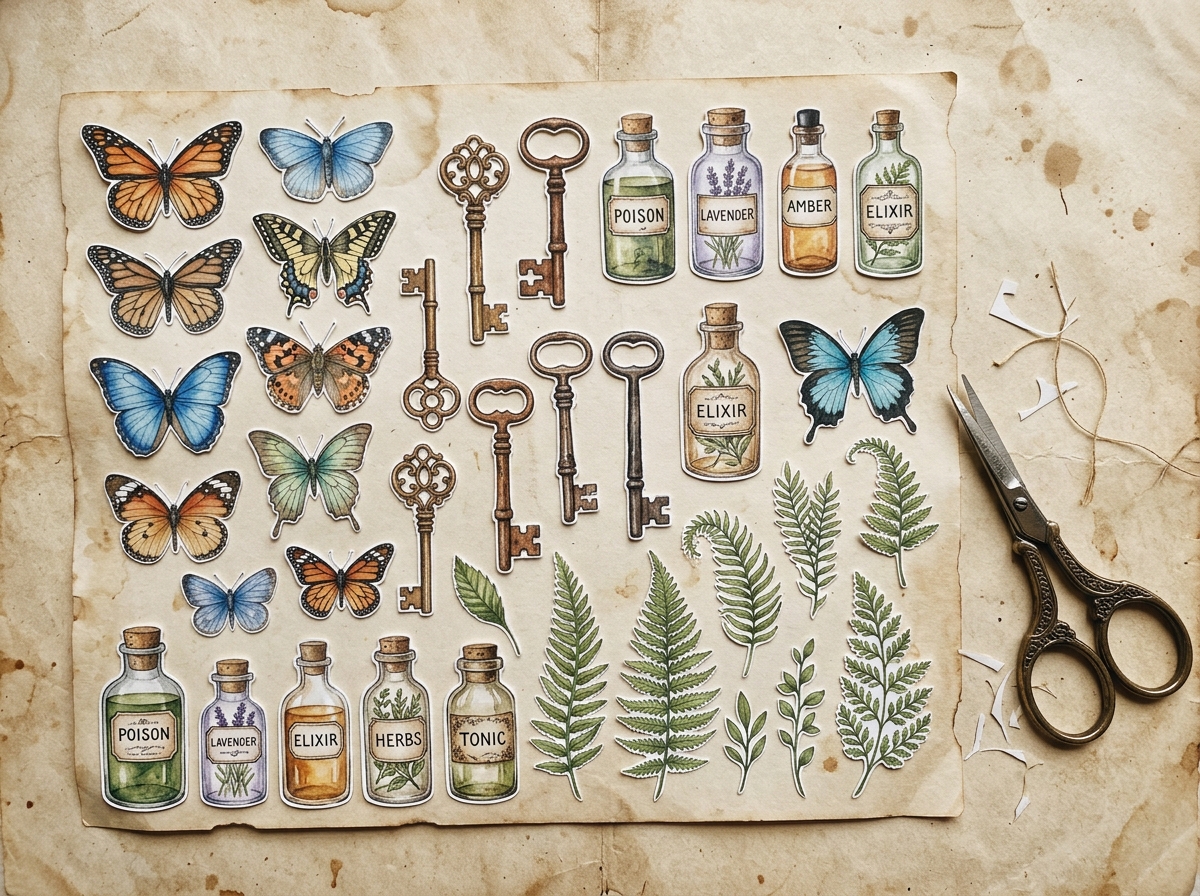
The most sustainable paper is the paper you already own — if you can find it and use it.
Paper is one of the most honest witnesses of conflict — and one of the most sensitive to collect.
A journal has no feed, no likes and no audience. That is not a limitation — it is the point.
"Cohesive" is the most-used and least-understood word in the Etsy digital paper niche. Here is what it means — and the words that say it more precisely.
You get 140 characters. Most listings waste the first forty. Here is a title formula that works for printable ephemera.
Cohesion is not a filter applied at the end — it is a decision made at the beginning and protected through every step.
So you can read the Seller Handbook, a forum thread or your own analytics without stopping every third word.
A ticket is a tiny contract, a timestamp and a portrait of a city — all for the price of a fare.
The first mass picture medium was also the first message anyone could afford to send — and it never really stopped being both.
An e-mail arrives. A letter was sent. The difference is not speed — it is presence.
We spend our days touching glass that pretends not to be there. Paper refuses the pretence — and that may be the point.
A city archive tells you what a government decided. A drawer of receipts tells you how people actually lived.
Most guides teach you how a journal should look. This series teaches how it should hold together.
A journal is not damaged by "time". It is damaged by five specific kinds of force — and every one of them is predictable.
Almost every "my journal won't close" problem begins with arithmetic that was never done.
Format is not a style choice. It is a specification — and it decides half of what happens next.
Ten lines of planning that separate a finished journal from a drawer of good intentions.
Weight is not thickness, thickness is not stiffness, and the label on the pack rarely tells you what you need to know.
One invisible property explains most "bad paper" complaints. Learn to find the grain and half your folding problems disappear.
"Strong paper" is not one property. It is three — and each part of a journal needs a different one.
The finish on a sheet is not cosmetic. It decides how ink sits, how glue sticks, and how gracefully the paper ages.
"Acid-free" is not a guarantee of immortality. Here is what actually happens to paper — and how to plan for it.
"300 DPI" is not a property of a file. It is a relationship between pixels and print size — and it changes the moment you scale.
A spread is only as good as the alignment of its two sides. Here is how to make the second side land exactly where the first one promised.
Most print-quality problems are three checkboxes away from being solved.
Standard paper forgives mistakes. Specialty stocks do not — but they repay the effort with textures nothing else can match.
Printing one beautiful page is craft. Printing thirty identical pages is process.
Buy less, make more: the three layers of supplies that actually matter — and the pretty things you can safely skip until later. From starter kit to full studio.
Four paper-keeping traditions, four sets of rules — and how to choose your first one. Exploring the differences between junk journals, scrapbooks, glue books, and commonplace books.
Signatures, spines, tuck spots and fussy cuts — the vocabulary of paper journaling, explained simply. A plain-English glossary of 32 key terms every crafter should know.
The warm, uneven look of old paper — without turning your pages into a crinkled science experiment. Tea, coffee or walnut ink? Dye before printing or after? What works, what wrinkles, and what to avoid.
The social ritual behind the small card — and how to use its beauty in your journal. Small enough to fit in a pocket, ornate enough to stop a page dead: the everyday paper that became the ancestor of modern collecting.
The exact settings, paper weights and double-sided tricks that turn a home printer into a vintage paper press. Paper weights, exact settings, and fixes for every common print problem.
Calculating spine width, nesting signatures, joining them into one spine — and hiding a secret flip-out pocket along the way. The complete multi-signature build.
No art degree, no expensive kit, no rules — just paper, glue and an hour to spare. The minimal supply kit, where to find ephemera, and how to make your first junk journal without spending a fortune.
Stop hoarding your prettiest pages — here is what to actually do with them. From tuck spots and belly bands to window apertures, explore twelve practical ways to turn printable ephemera into journal magic.
One kit, one weekend, one finished book you will want to fill immediately. Complete step-by-step tutorial on making a mini junk journal from download to bound spine.
Master the archival process of scanning colored illustrations, botanical plates, and chromolithographs from old books: optimal DPI, descreening halftone patterns, color calibration, and reducing huge 60MB TIFF files to lightweight 2MB printables without losing rich chromatic fidelity.
Turn stark, flat digital scans of historical newspapers, vintage postcards, and calling cards into authentic antique ephemera: isolate black ink with Multiply blend modes, replace clinical white backgrounds with tea-stained parchment, add realistic foxing spots, and simulate letterpress ink bleed.
Step-by-step masterclass on designing authentic vintage French ephemera tags: harness modern graphic design software (Photoshop & Affinity Designer), restored 19th-century Parisian manuscripts, antique calligraphic receipts, and French botanical engravings to create heirloom-quality printable tags for junk journals. Features embedded video process and links to curated ephemera kits.
Bilinear vs. Bicubic for printing junk journal and ephemera: learn the technical differences between resampling interpolation methods, which algorithm to choose in Photoshop, GIMP, or printer drivers, and how to preserve microscopic antique script, botanical etchings, and tea-stained parchment textures at 300 DPI.
What is ephemera? Discover the exact definition, origins, and 6 main types of printed paper ephemera, plus actionable ways to use vintage and printable ephemera in junk journals, scrapbooks, and collage art.