40 Collection Name Patterns That Work (With Examples)
By Ephemera Crafts Atelier
•
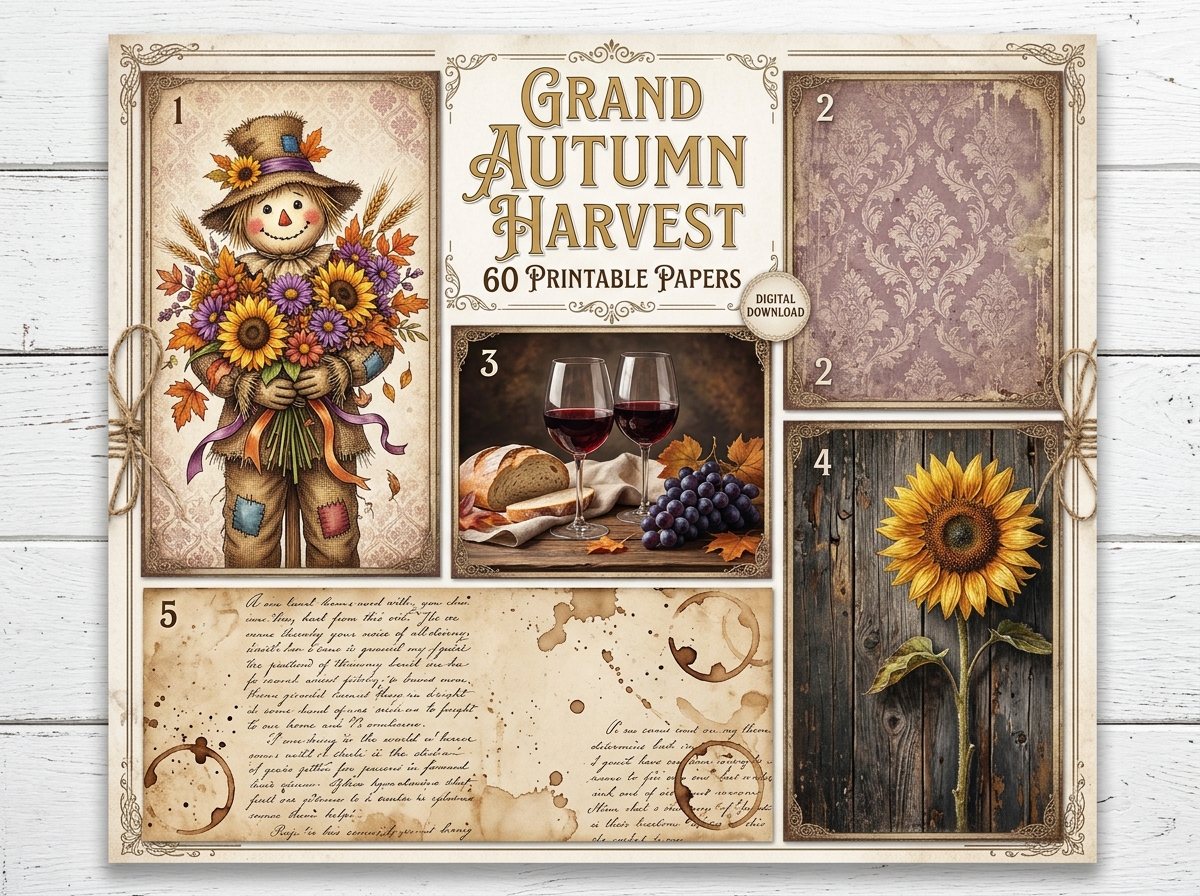
A collection name has two jobs: make someone feel something, and help them find you again.
Naming a collection is harder than naming a product, because the name has to cover a family. It should suggest a world, survive being printed on a tag, and still make sense in a search result. The good news is that most successful names follow a small number of patterns. Below are ten patterns with four ready-to-adapt examples each — forty names in total — and a method for testing the one you choose.
## 1. Place + trade
An imagined business or place implies a whole aesthetic: who worked there, what paper they used, what it smelled like.
* Lavender Bookshop
* Forest Apothecary
* Harbour Stationer
* Village Post Office
## 2. Season + material
Instantly communicates palette and content, and sorts naturally into seasonal releases.
* Autumn Ledger
* Winter Vellum
* Summer Linen
* Spring Parchment
## 3. Adjective + noun
Quiet, evocative, and easy to extend across products. Keep the adjective specific rather than generic.
* Quiet Archive
* Faded Ledger
* Hushed Parlour
* Worn Correspondence
## 4. The [noun] collection
A classic structure that scales well and sounds like a publisher's series.
* The Moth Collection
* The Archive Collection
* The Parlour Collection
* The Orchard Collection
## 5. Object + number
Suggests a catalogue, an archive, a limited run — and makes sequels effortless.
* Ledger No. 7
* Cabinet No. 12
* Parcel No. 3
* Folio No. 9
## 6. Verb + object
Action names feel like a workshop and work especially well for kits and tutorials.
* Gather & Stitch
* Cut & Keep
* Fold & Remember
* Paste & Ponder
## 7. Noun & noun
Two concrete words create a small still life. The ampersand does a lot of design work.
* Ink & Ivy
* Paper & Pine
* Brass & Blossom
* Thread & Thyme
## 8. Era-inspired
Useful when the palette and typography are period-specific. Keep the era broad to avoid factual overreach.
* 1920s Parlour
* 1940s Post
* 1950s Kitchen
* 1970s Schoolroom
## 9. Mood / atmosphere
Best for collections sold on feeling rather than theme. Pair with a concrete descriptor in the listing.
* Moonlit Study
* Rainy Afternoon
* Attic Light
* Sunday Quiet
## 10. Character / story
Story names create the strongest emotional pull — and the strongest need for consistency across the collection.
* The Cartographer's Wife
* The Botanist's Daughter
* The Stationer's Apprentice
* The Lighthouse Keeper's Log
> **Build a naming system, not just a name:** Collection name + element type + number: "Forest Apothecary — Journal Cards 01". Consistent naming makes your shop feel like an archive, helps customers collect, and makes future releases easier to slot in.
## How to test a name before you commit
1. **Say it out loud.** If you stumble, customers will too;
2. **Search it.** Check the marketplace and general search for duplicates and unfortunate associations;
3. **Write it on a tag.** Long names die at small sizes; test at actual print dimensions;
4. **Add a product to it.** "Forest Apothecary — Tags" should sound natural; if it does not, the name is too narrow;
5. **Check the trademark.** For a shop name or a major series, do a basic trademark search in your market;
6. **Spell it for a friend.** If it needs spelling twice, simplify it.
## What makes a name fail
<ul>
<li><strong>Too generic:</strong> "Vintage Papers" describes a category, not a collection;</li>
<li><strong>Too poetic:</strong> a name with no concrete noun gives the buyer nothing to visualise;</li>
<li><strong>Too long:</strong> if it does not fit a tag or a thumbnail, it will be truncated everywhere;</li>
<li><strong>Too close to a competitor:</strong> confusing for buyers and legally risky;</li>
<li><strong>Inconsistent with the contents:</strong> a "Gothic" name on a pastel kit breaks trust.</li>
</ol>
Choose a pattern, generate ten names, test three, keep one. The name will not make a weak collection strong — but a good one makes a strong collection easier to remember, easier to search, and easier to love.
---
*Related: <a href="/blog/cohesive-collection-vocabulary/">the vocabulary of cohesive collections</a> · <a href="/blog/etsy-listing-titles-junk-journal/">Etsy title formula</a> · <a href="/blog/build-cohesive-junk-journal-kit/">building a cohesive kit</a>.*