Halloween Ephemera: From Victorian Postcards to Die-Cut Decorations
By Ephemera Crafts Atelier
•
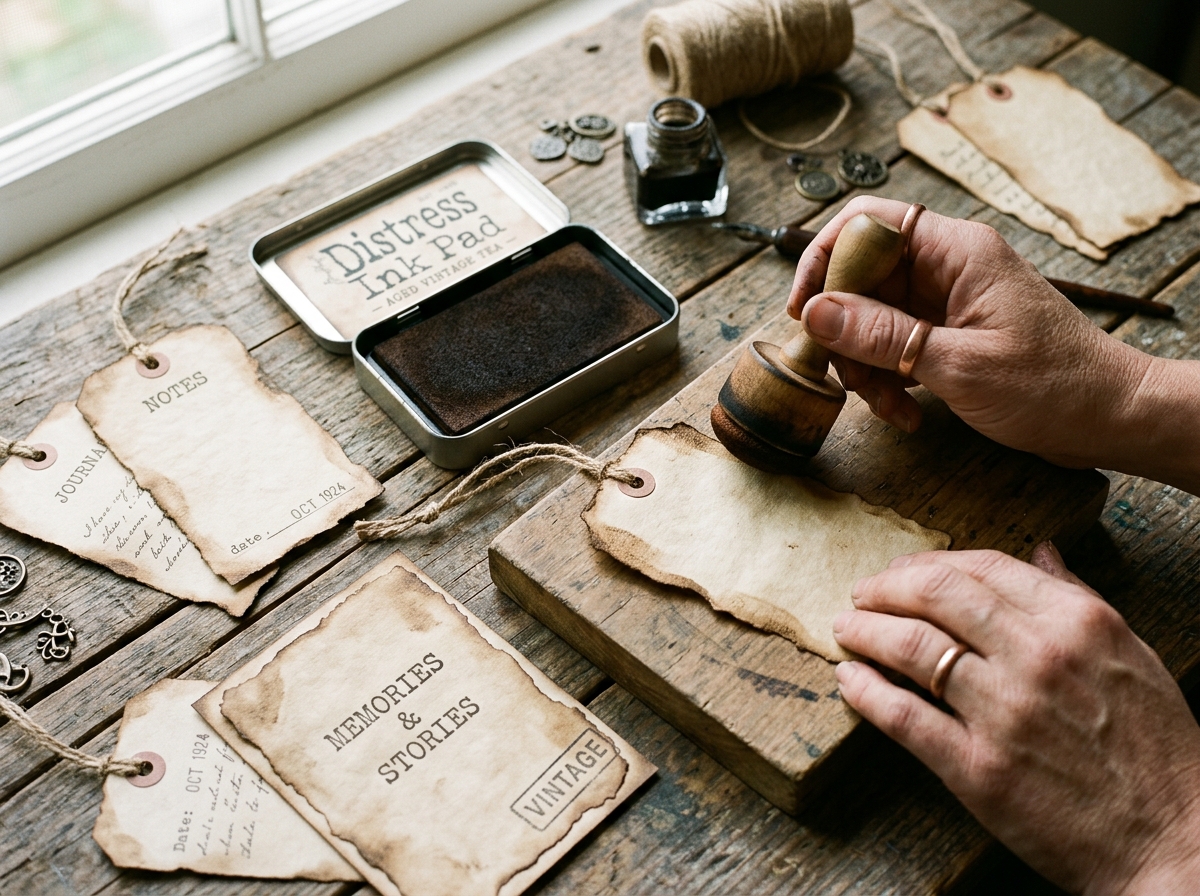
No holiday consumed paper more eagerly — and no holiday left less of it behind.
Halloween is a holiday built out of temporary things: carved vegetables, costumes worn once, decorations hung for a week. That is precisely why its paper history is so fascinating — and so scarce. Cards, die-cuts, invitations, masks and party favours were made to be used and thrown away. The pieces that survived did so by accident, tucked into albums, pressed between book pages, or forgotten in a box that someone could not bring themselves to bin.
## How Halloween became a paper holiday
The modern Halloween took shape in the nineteenth century, as older harvest and folk traditions were reshaped by printing, commerce and the growing fashion for greeting cards. Publishers discovered that almost any occasion could support a card, and Halloween — with its ready-made cast of witches, cats, bats, pumpkins and moonlight — was a gift to illustrators.
By the early twentieth century, Halloween postcards were a recognised seasonal genre. The imagery we still associate with the holiday was standardised on paper: orange and black palettes, grinning jack-o'-lanterns, black cats with arched backs, witches on broomsticks, and children bobbing for apples. Many cards were whimsical rather than frightening — Halloween as a night of mischief and romance, not horror.
## The age of die-cuts
The other great Halloween paper tradition is the die-cut decoration: flat or jointed figures stamped from card, often with crepe paper, honeycomb tissue or wire joints. Manufacturers produced cats, skeletons, pumpkins, owls and witches in astonishing variety, and families kept them from year to year in envelopes and boxes.
Die-cuts are a lesson in ephemeral engineering. They had to be cheap to produce, flat to ship, easy to hang and durable enough for a few seasons. The surviving examples often show exactly that history: faded faces, creased joints, a missing limb, a pinhole where a string once hung. For collectors, the wear is not damage — it is proof of use.
## Mid-century party paper
The mid-twentieth century moved Halloween further into the home: printed invitations, paper masks, place cards, napkin rings, coasters, treat bags and decorations in bold graphic styles. This is the era of children's parties, school parades and neighbourhood celebrations — and of paper goods designed to look cheerful rather than gothic.
For journal makers, this mid-century material is often more usable than Victorian cards: flatter, more graphic, easier to cut, and rich in the muted orange, mustard and charcoal tones that sit comfortably in vintage-style spreads.
## Why Halloween paper is collectible
* **Short life:** decorations were used for days, then discarded;
* **Fragility:** thin card, crepe paper and tissue rarely survive attics and damp;
* **Seasonality:** demand spikes every autumn, and supply is limited;
* **Imagery:** the visual language is instantly recognisable and endlessly repeatable;
* **Nostalgia:** many collectors are buying back their own childhood.
> **Collector's note:** Store Halloween paper away from light and heat: orange and black inks are especially prone to fading, and crepe paper becomes brittle with age. Keep die-cuts flat between acid-free sheets; do not fold jointed figures to save space.
## Using Halloween ephemera in junk journals
The temptation is to go full orange-and-black. The better approach is to treat Halloween as a palette, not a costume:
* **Muted base, bright accent:** aged cream, sepia and charcoal for pages; one pumpkin-orange accent per spread;
* **Use the graphics, not the kitsch:** a die-cut cat silhouette or a vintage tag reads more sophisticated than a cartoon ghost;
* **Layer with text:** old ledger pages and handwriting fragments give the orange somewhere to sit;
* **Make it interactive:** a small envelope pocket for a "treat" tag, a flip-out bat, a belly band with a moon tag;
* **Let one piece be the hero:** a single postcard or die-cut per spread; everything else supports it.
Our [Halloween envelope set](/product/halloween-envelopes-with-pointed-flap-junk-journal-printable-halloween-ephemera/) and [tags, labels and pockets](/product/halloween-ephemera-tags-labels-pockets/) are designed for exactly this layered approach; the [purple Halloween journal kit](/product/purple-halloween-journal-kit-60-vertical-single-pages/) takes the palette in a moodier direction. If you want the history behind the imagery, the [postcard story](/blog/evolution-of-the-postcard/) explains how these seasonal cards became collectible in the first place.
## A note on reproductions
Original Halloween paper is scarce and often fragile. For journaling, scan or photograph originals and print reproductions on matte stock — you keep the look without sacrificing the artefact. The [printing guide](/blog/guide-printing-300-dpi-junk-journal-printables-at-home/) covers the settings; the [aging guide](/blog/tea-dyeing-aging-paper/) explains how to tone modern paper so a reproduction sits naturally beside genuine pieces.
Halloween ephemera is a reminder of what ephemera means: paper made for a moment, kept by accident, treasured later. A faded cat, a creased invitation, a card sent by someone long gone — each is a small proof that the holiday happened, and that someone wanted to mark it.
---
*More seasonal history: <a href="/blog/christmas-card-history/">the Christmas card</a> · <a href="/blog/victorian-calling-cards-ephemera/">Victorian calling cards</a> · <a href="/blog/what-is-ephemera/">what ephemera is</a>.*