The Build Brief: How to Plan a Journal Before You Cut Paper
By Ephemera Crafts Atelier
•
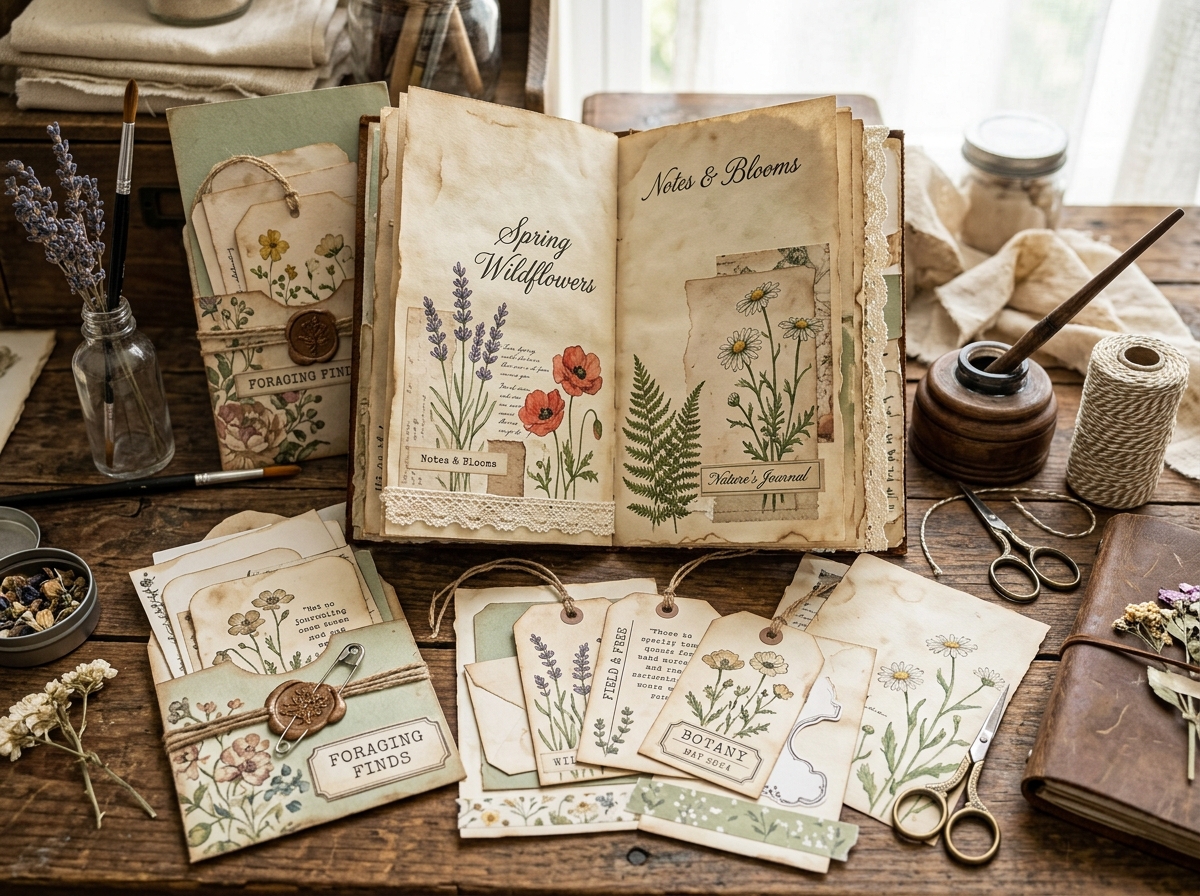
Ten lines of planning that separate a finished journal from a drawer of good intentions.
Most unfinished journals do not fail because the maker lacked skill. They fail because the project never had a definition: no clear purpose, no page count, no decision about which elements mattered, no stopping point. A build brief fixes that in one page. It is the same tool a studio uses before a commission — and it works just as well for a personal gift.
## The ten fields
1. **Working title.** A name focuses the mind: "The Autumn Letter Journal", "Travel Book No. 1".
2. **Purpose.** What is this book for? Daily writing, travel, a gift, storing ephemera, testing a technique.
3. **User.** Who will use it, and how roughly? A child's journal and an archive piece have different requirements.
4. **Format and page count.** Mini, A5, half-letter, traveler's insert, folio — plus the target page count.
5. **Palette.** Three to five colours plus neutrals. Write them down; do not rely on memory.
6. **Texture families.** Which paper types will carry the look: aged documents, botanicals, typography, solids.
7. **Element inventory.** How many pockets, tags, folios, tip-ins, belly bands — with numbers.
8. **Mechanisms.** Which interactive features are essential, and which are nice-to-have.
9. **Constraints.** Time available, materials on hand, printing limits, budget.
10. **Success criteria.** How will you know it worked? "Closes flat, survives a week in a bag, fits in the gift box."
## Worked example 1 — a travel journal
*Title:* "Coastline — travel book for a ten-day trip." *Purpose:* record a trip, hold tickets and postcards. *User:* me, carried daily in a backpack. *Format:* slim A5, two signatures, about 40 pages. *Palette:* cream, faded blue, rust, charcoal. *Textures:* aged maps, ledger paper, plain toned sheets. *Elements:* two pockets, one envelope folio, one belly band, six tags. *Mechanisms:* tuck spots only; no fragile pop-ups. *Constraints:* build in two evenings; print on A4; use existing cardstock. *Success:* closes without strain, fits the rucksack pocket, survives the trip.
Notice how the format and elements follow from "carried daily in a backpack": light, strong, few mechanisms, secure closure. The brief has already made a dozen decisions before any paper is cut.
## Worked example 2 — a gift journal
*Title:* "Letters to M. — birthday journal." *Purpose:* a personal gift with space for writing and keepsakes. *User:* a close friend who journals at home. *Format:* A5, three signatures, about 60 pages. *Palette:* soft sage, parchment, dusty rose. *Textures:* botanical plates, handwriting patterns, plain cream. *Elements:* one letter pocket on the inside cover, four tags, two small pockets, one wax seal closure. *Mechanisms:* a tip-in with a handwritten note; a belly band. *Constraints:* two weeks; must fit a standard gift box. *Success:* the recipient can start writing immediately; nothing feels too precious to use.
The gift brief prioritises emotional function over ruggedness — but it still specifies page count, elements and a success criterion. That is what keeps a gift from becoming an unfinished object on your desk.
> **The parking lot:** Keep a separate note for ideas that do not fit the current brief. Most scope creep comes from a good idea arriving at the wrong time. Park it, finish the build, then give it its own brief.
## How to use the brief during the build
The brief is a decision filter, not a contract carved in stone. When you are tempted to add a fifth pocket, ask whether it serves the purpose and whether the spine budget can take it. When a colour swatch seems "almost right", check it against the written palette. When time runs short, the success criteria tell you what must not be compromised.
If the brief changes, change it deliberately — write the new decision and the reason. Unrecorded changes are how a mini journal becomes an unfinished A5 with three incompatible palettes.
## Pre-flight checklist
* Brief written and visible on the desk;
* Format chosen, page count and signature count calculated;
* Paper weights assigned to pages, pockets and cover;
* Element list counted and distributed across signatures;
* One test signature built and measured;
* Printer tested with a single sheet;
* Time and materials honestly assessed;
* Success criteria written in one sentence.
When those eight lines are true, the build becomes calm: you are no longer inventing the journal while making it. You are executing a plan that already knows what it is — which is exactly how a small paper book gets finished.
---
*Next in the series: <a href="/blog/choosing-junk-journal-format/">choosing a format</a> · <a href="/blog/planning-junk-journal-page-count/">page count and spine budget</a> · <a href="/blog/build-cohesive-junk-journal-kit/">building a cohesive kit (for sellers)</a>.*