Junk Journal Engineering: Designing Books That Survive Being Used
By Ephemera Crafts Atelier
•
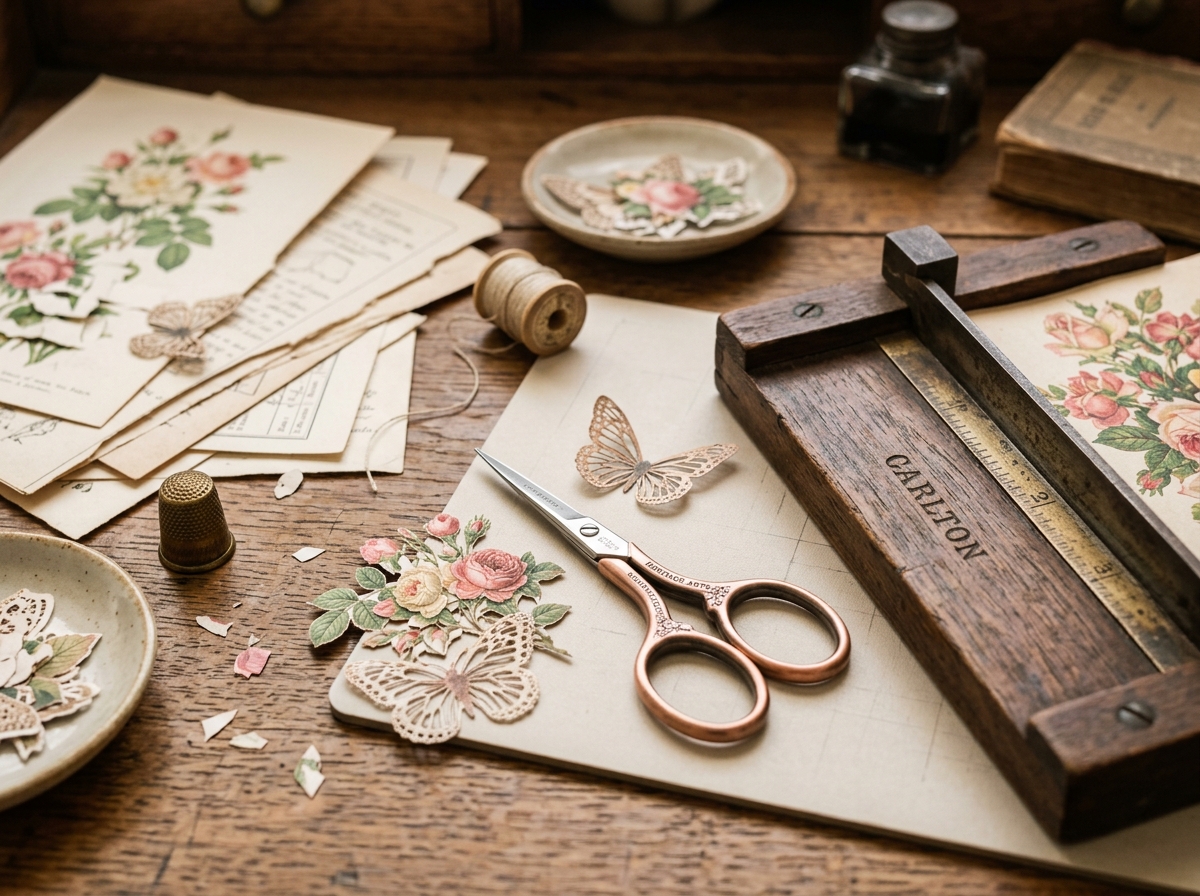
Most guides teach you how a journal should look. This series teaches how it should hold together.
There is a particular disappointment familiar to anyone who makes journals: the book looks wonderful on the desk, and then, three weeks later, the pocket is tearing, the spine is pulling, the pages have developed a wave, and the cover no longer closes. Nothing was "wrong" aesthetically. What failed was the structure.
This series treats the junk journal as what it actually is: a small engineered object. It has loads, tolerances, mechanisms, materials with different properties, and failure modes. Thinking like an engineer does not make the craft colder — it makes the beautiful thing last. A journal that survives being carried, stuffed, opened and written in is a better journal than one that only survives being photographed.
## What "engineering" means for a paper book
Engineering here is not mathematics for its own sake. It is a sequence of ordinary decisions made in the right order:
1. **Requirements** — what will this journal be used for? Carried daily? Filled with heavy ephemera? Written in with a fountain pen?
2. **Materials** — paper weight, grain, coating, adhesive, thread, board. Each choice has consequences beyond appearance.
3. **Structure** — page count, signature size, spine allowance, cover attachment.
4. **Mechanisms** — pockets, flaps, tip-ins, closures: how they move and what they pull on.
5. **Assembly** — order of operations, moisture control, pressing.
6. **Testing** — open it fifty times, stuff it, carry it, and see what complains.
Every step is cheap to do well at the planning stage and expensive to fix afterwards. That asymmetry is the whole argument for thinking ahead.
## The five constraints every journal balances
Like any structure, a journal is a negotiation between competing goals:
| Constraint | What it asks for | What it costs |
| :--- | :--- | :--- |
| **Strength** | Reinforced hinges, heavier paper, stitched signatures | Time, bulk, stiffness |
| **Flatness** | Even moisture, pressing, balanced layers | Waiting time, careful gluing |
| **Flexibility** | Thin signatures, soft spine, flexible cover | Less structural protection |
| **Capacity** | More pages, deeper pockets, expanding folios | Weight, spine bulk, closure strain |
| **Repairability** | Accessible stitches, reversible adhesives where possible | Less "permanent" construction |
You cannot maximise all five. A travel journal might prioritise strength and flatness; an art journal might prioritise capacity and flexibility; a gift journal might prioritise elegance and repairability. The engineering question is not "which is best" but "which trade-off does this book need".
## The failure modes worth designing against
Journals fail in predictable ways. Learn the list and you will start seeing problems before they happen:
* **Cracked folds** — folding against the grain or scoring too little;
* **Torn hinges** — flaps and tip-ins attached with a single weak strip;
* **Spine pull-out** — too many pages or too much tension in the stitching;
* **Warping and cockling** — moisture from glue or dye, uneven drying;
* **Glue bleed and staining** — too much adhesive on thin paper;
* **Pocket mouths tearing** — load concentrated on an unreinforced edge;
* **Cover detachment** — a heavy cover attached only at the spine with weak adhesive;
* **Mould and foxing** — damp storage or sealing a journal before it is fully dry.
Each of these has a known countermeasure, and most of them are cheap: score folds, reinforce hinges, budget the spine, press the book, use less glue, store dry. The series will cover each in detail.
> **The 50-open test:** Before you decorate a single page, build one signature, bind it, and open it fifty times. Then stuff the pockets with paper and carry it in a bag for a day. Whatever fails in that test will fail in a customer's hands — better to learn it now, on scrap, than after the cover is finished.
## A one-page engineering checklist
Before starting any journal, answer these eight questions:
1. What is the journal for — daily carry, art, gift, travel, archive?
2. How many pages does that use case realistically need?
3. What paper weights will serve pages, pockets and cover?
4. How many signatures, and how thick will the spine be?
5. Which interactive elements are essential, and where will their load go?
6. Which adhesives and hinges are appropriate for each material?
7. How will I keep the book flat while it dries and afterwards?
8. What will I test before committing the final materials?
If you can answer those, you are already engineering. The rest of this series fills in the details — module by module, from paper science to production workflow.
One reassurance before we go deeper: none of this requires a workshop or expensive tools. It requires attention to how paper behaves, and the willingness to test before you commit. The handmade charm survives; it simply stops being an excuse for things falling apart.
---
*Next in the series: <a href="/blog/five-load-cases-junk-journal/">the five load cases every junk journal must survive</a> · <a href="/blog/planning-junk-journal-page-count/">planning page count, signatures and spine budget</a> · <a href="/blog/junk-journal-build-brief/">the build brief</a>.*