Marginalia: A History of Writing in the Margins
By Ephemera Crafts Atelier
•
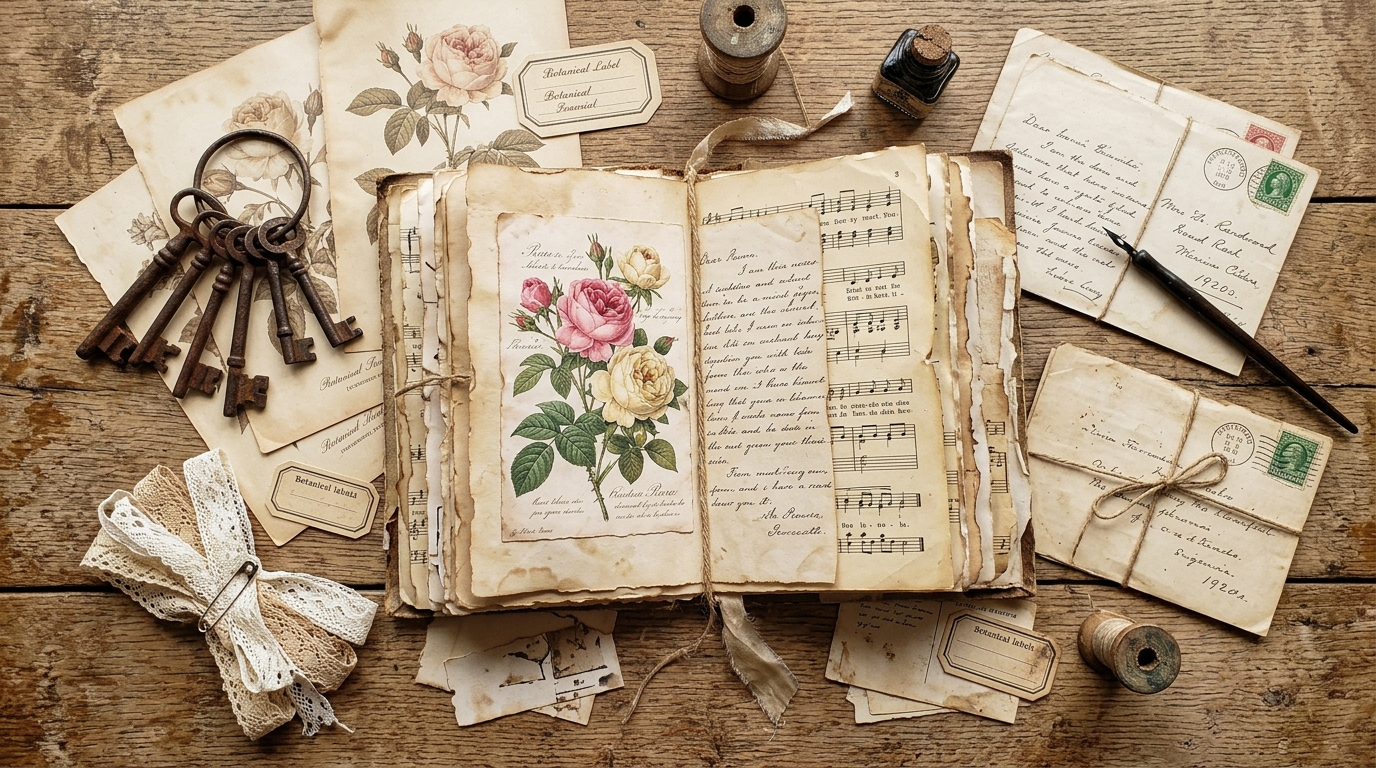
The edges of a book are where readers stop being passive — and start talking back.
Open a used book and you may find two texts inside: the printed one, and the handwritten one in the margins. A correction, a question, a shopping list, a doodle, a date. Marginalia is the most intimate form of ephemera because it is not made for an audience. It is a reader thinking out loud, often in pencil, often without any expectation that anyone else will ever see it.
## A short history of the edge
Writing beside a text is as old as the codex. Medieval scribes and readers added glosses — explanations of difficult words, cross-references, commentary — in the margins of manuscripts. In the Renaissance, humanist readers annotated classical texts as a way of studying them, and the practice became part of scholarship: to read was to respond.
By the eighteenth and nineteenth centuries, marginalia had become a recognisable habit of ordinary readers as well as famous ones. Books were expensive and personal; writing in them was a way of making them yours. The Romantic-era writer Samuel Taylor Coleridge filled his books with notes and commentary, and his marginalia were later published — helping to establish the word itself as a genre. Not every reader was so prolific, but the impulse was widespread: underline, argue, translate, date, dedicate.
## What marginalia can contain
* **Glosses and translations** — explanations of unfamiliar words or passages;
* **Commentary and argument** — agreement, disagreement, corrections;
* **Cross-references** — page numbers, other books, reminders;
* **Ownership marks** — names, dates, bookplates, "ex libris";
* **Everyday traces** — shopping lists, phone numbers, addresses, pressed flowers;
* **Emotional traces** — a date, a name, a line underlined because it mattered;
* **Children's marks** — scribbles, drawings, attempts at handwriting.
For historians of reading, these traces are evidence of how books were actually used: which passages were difficult, which were loved, which were skipped. For biographers, they can be clues to a person's thinking. For the rest of us, they are simply proof that a book was alive in someone's hands.
## Why marginalia matters to junk journaling
Junk journals are built from the idea that paper carries a life. Marginalia is that idea in its purest form: a page that already contains a conversation. Using annotated pages in a journal — or recreating the look — adds a layer that printed ephemera alone cannot provide.
Ways to bring margins into your practice:
* **Leave a real margin.** Design pages with a wide outer margin specifically for notes, dates and small sketches;
* **Write in the margins of printables.** Add pencil notes, question marks, translations — let the page look read;
* **Use annotated book pages as backgrounds.** Scan them first; the handwriting becomes texture;
* **Create "found" marginalia.** Write a note as if by a previous owner, date it decades earlier, and tuck it into a pocket — a gentle fiction that invites the reader to wonder;
* **Keep a margin log.** A small notebook where you jot the quotes and thoughts that later go into journal margins.
> **Pencil, not pen:** If you annotate a book that has any value, use pencil and keep it light. If you want the look without touching an original, print a reproduction and annotate that. The aesthetic survives; the artefact does not have to.
## The ethics of adding your own
Marginalia is personal, but it is also part of the object's history. Adding your own notes to a rare or valuable book can reduce its value and erase evidence of previous readers. Annotate freely in books you own and use; hesitate with anything old, scarce or borrowed. And never write in a library book — that is not marginalia, that is damage shared with everyone who comes after you.
## The margin as a design principle
Margins are not empty space; they are where the page breathes. A journal spread with a generous margin feels calmer and more usable than one packed edge to edge. Try this: on your next page, deliberately leave one outer margin blank, then fill it with a single line of handwriting, a date, or a small sketch. The page will immediately feel more like a book and less like a collage.
Marginalia reminds us that reading is not consumption — it is a relationship. The printed text proposes; the margin answers. In a junk journal, you get to be both the author and the reader, and the edge is where the conversation happens.
---
*Related: <a href="/blog/lost-art-of-letter-writing/">the lost art of letter writing</a> · <a href="/blog/what-is-ephemera/">what ephemera is</a> · <a href="/blog/nine-spread-layouts/">nine spread layouts</a>.*