Sizing, Acidity and Aging: What Lasts and What Yellows
By Ephemera Crafts Atelier
•
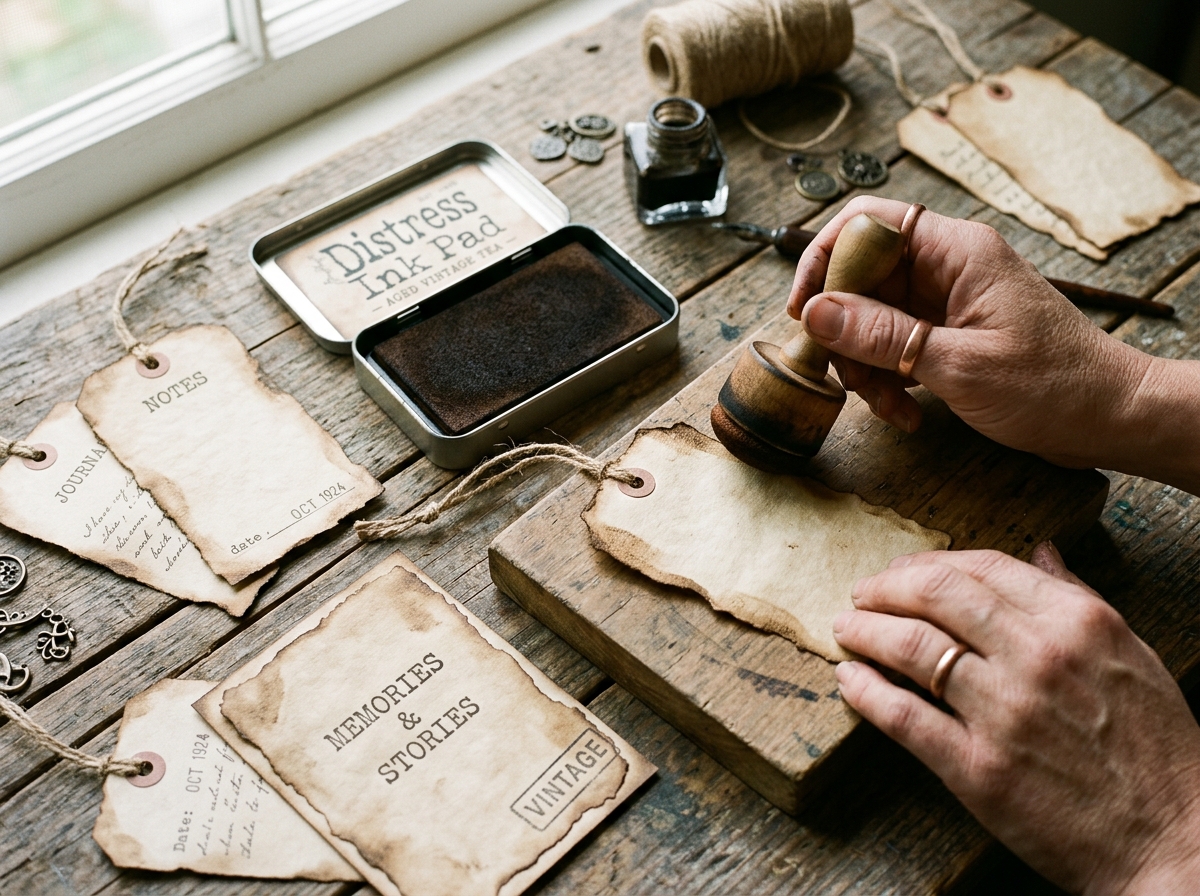
"Acid-free" is not a guarantee of immortality. Here is what actually happens to paper — and how to plan for it.
Open any old book and you can read its material history in the margins: cream pages turned brown, edges brittle, a faint vinegar smell. That is not just "age". It is chemistry — acidity, lignin, sizing and environmental exposure working slowly on cellulose. Understanding it helps journal makers choose materials honestly and store them sensibly, without pretending a craft project needs museum-grade conservation.
## What sizing does
Sizing is a treatment that makes paper resist liquids. It can be added internally (in the pulp) or applied to the surface (surface sizing, often combined with coating). Sizing is why ink sits on the sheet instead of feathering into the fibres, and why glue does not soak straight through.
For journal work, sizing explains several everyday behaviours:
* **Heavily sized paper** accepts ink crisply but can resist water-based glue and tea staining;
* **Lightly sized paper** absorbs ink and glue readily, which is good for bonding but can cause feathering with wet media;
* **Inconsistent sizing** within a pack produces patchy printing — one sheet crisp, the next slightly blurry.
## Acidity and lignin
Paper is made mainly of cellulose. Acids attack cellulose chains, making paper yellow, weaken and eventually crumble. The main sources:
* **Lignin** — a component of wood pulp that becomes acidic as it degrades. Newsprint is the classic example: cheap, abundant, and doomed to yellow and brittle;
* **Acidic sizing and additives** — historically common in mass-produced paper;
* **Environmental acids** — pollution, poor storage, acidic adhesives and tapes;
* **Inks and coatings** — some can migrate or react over time.
**Acid-free** paper is made with a neutral or slightly alkaline pH, often buffered with calcium carbonate. **Lignin-free** is a separate claim: acid-free paper can still contain lignin if not purified. For long-lived work, you want both. For a junk journal made from rescued paper, you accept mixed materials and design for a reasonable lifespan rather than permanence.
| Material | Typical longevity | Notes |
| :--- | :--- | :--- |
| Newsprint, cheap flyers | Short — yellows and brittles relatively quickly | Fine as ephemera; avoid for structural pages |
| Standard office paper | Moderate | Often acid-free these days, but not designed for permanence |
| Archival / buffered paper | Long | Made for documents and conservation; more expensive |
| Cotton / specialty fibre | Long | Strong, stable, often used in bookbinding |
> **Realistic goal:** A junk journal is a working object, not a museum archive. Aim for "decades, not centuries": acid-free where it is structural, mixed rescued paper where it tells the story, and good storage to slow the inevitable.
## Adhesives and tapes matter too
You can choose perfect paper and ruin it with the wrong adhesive. Rubber cement and some cheap tapes yellow, stain and fail; ordinary masking tape becomes brittle and leaves residue. PVA is generally a good choice for paper, and double-sided tape is convenient but should be tested for long-term staining. For anything you want to keep for years, avoid unidentified "craft glue" and test scraps before committing a page.
## Storage: the biggest lever
Chemistry is slow; environment is fast. Heat, humidity, light and pests do more damage in a year than acidity does in a decade. Practical rules:
* store journals flat or upright in a dry room, away from radiators and windows;
* avoid attics and basements, where temperature and humidity swing;
* keep paper out of direct sunlight — dye inks fade quickly;
* use acid-free folders for loose ephemera; ordinary plastic sleeves can trap moisture in humid conditions;
* let glued pages dry completely before closing or sealing a journal.
## Quick tests and honest expectations
A pH pen is an inexpensive way to check whether a paper or board is acidic. A vinegar smell in an old book is a warning sign of degrading paper. A corner that snaps rather than folds tells you the sheet has already lost flexibility. None of these tests will make a craft paper archival — but they help you put the right materials in the right places.
The healthiest attitude is neither "it must last forever" nor "it is all disposable". Build with materials that suit the object: structural parts from stable stock, decorative parts from whatever tells the story, and storage that gives the whole thing a fair chance. Paper will age regardless; the goal is that it ages like a book, not like a receipt left in the sun.
---
*Next in the series: <a href="/blog/resolution-budgets-300-dpi/">resolution budgets for printing</a> · <a href="/blog/coated-vs-uncoated-paper/">coated vs uncoated paper</a> · <a href="/blog/paper-strength-tear-fold/">paper strength</a>.*