Texture Therapy: The Tactile Hunger for Paper in a Screen Age
By Ephemera Crafts Atelier
•
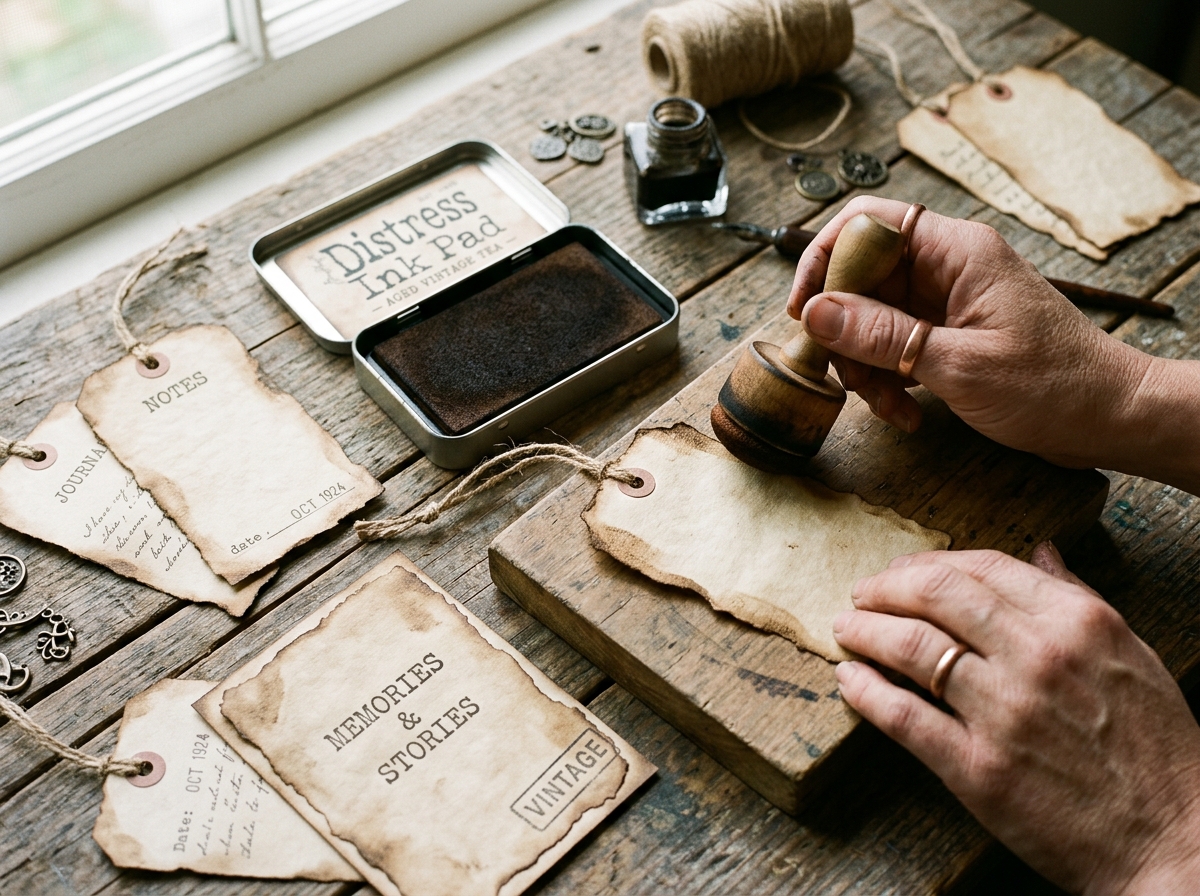
We spend our days touching glass that pretends not to be there. Paper refuses the pretence — and that may be the point.
Ask a room of crafters why they make things with paper and you will hear the same words again and again: *the feel of it*. Not the look — the feel. The weight of a sheet in the hand, the sound of a fold, the drag of a glue stick, the dry whisper of an old page. In an age when most communication happens on a surface designed to be perfectly smooth, paper offers the opposite: friction, grain, variation, consequence.
People in the hobby often call this "texture therapy", half-jokingly. The phrase is informal, but the experience behind it is real and widely described: working with tactile materials calms the pace of thought, gives the hands a task, and leaves something behind that can be held.
## What "tactile hunger" describes
The phrase is not a medical term — it is a way of naming a common sensation. After hours of typing, scrolling and tapping, the hands have been busy but under-stimulated: the same smooth gesture, the same flat response, thousands of times. When someone then picks up a sheet of watercolour paper, tears a deckled edge, or presses a wax seal, the feedback is suddenly varied and consequential. The material pushes back.
Crafters describe the effect in ordinary language: the mind quiets, the breath slows, the sense of time changes. Whatever the mechanism, the practice is easy to test on yourself. Sit with a sheet of heavy paper for five minutes, fold it, crease it, tear one edge, listen to it. Most people find it unexpectedly absorbing.
## The textures of old paper
Antique and vintage paper is a catalogue of tactile experiences that modern office paper has engineered away:
* **Deckled edges** — the rough, feathered edge left when paper is torn or separated by hand;
* **Embossing and blind stamping** — raised or sunken patterns you can feel before you see them;
* **Foxing** — the small brown spots of age, each with a slightly different surface;
* **Ink bite** — the faint relief of letterpress printing, where the press pushed paper into type;
* **Crinkle and cockling** — the soft, irregular waves of paper that has absorbed moisture and dried flat again;
* **Wax and sealing** — the hard, cool smoothness of a seal against the grain of an envelope.
None of these textures are "flaws" in the craft sense. They are the evidence of material history — and they are exactly what hands are looking for.
## Why junk journaling satisfies the craving so well
Junk journaling is unusually tactile because it involves the whole cycle of making: selecting, tearing, folding, cutting, gluing, pressing, writing. Every step has a sound and a resistance. The materials are deliberately imperfect — rescued paper, torn edges, old book pages — so the hands are never asked to be precise in a sterile way. The journal accepts handling; it is meant to be opened, riffled, stuffed with more paper.
There is also a sonic dimension. The crinkle of thin paper, the snip of scissors, the soft rip of a perforated edge: these sounds are part of why journaling videos are so soothing to watch. The ASMR-adjacent pleasure of paper is not a trend invented by the internet — it is a property of the material that the internet simply made visible.
> **Try this:** Make a "texture palette" page: gather five papers with different surfaces — smooth, rough, coated, handmade, aged — glue a small square of each onto one page, and write one word under each describing how it feels. It takes ten minutes and trains your hands to notice what they already know.
## The digital bridge
It would be easy to frame this as paper versus screens, but the more interesting relationship is complementary. Digital tools make paper practice richer: you can find a restored Victorian plate, print it at home, and hold in your hand an image that exists nowhere physically. The screen handles search, storage and reproduction; the paper handles presence.
Printing at home also lets you choose the tactile experience deliberately. A lighter matte stock feels like a journal page; heavy cardstock feels like a card; vellum adds a translucent layer that changes the sound of the page. Our [printing guide](/blog/guide-printing-300-dpi-junk-journal-printables-at-home/) covers the practical side — weights, settings, drying — but the sensory side is worth planning too: choose paper by how it feels, not only by how it looks.
## A small practice for busy hands
You do not need a studio or a finished journal to begin. Keep a small tray of textured scraps near where you sit: an envelope, a piece of cardstock, a torn page, a tag. When a call or a task leaves you restless, handle them for a few minutes — fold, crease, sort. The point is not productivity; it is the return of feedback. Paper is patient; it does not refresh, notify or judge. It simply waits, with a surface that has something to say.
That is the quiet promise of the craft: in a world of perfectly smooth interfaces, a rough edge is a kind of relief.
---
*Continue the series: <a href="/blog/paper-time-capsule/">the paper time capsule</a> · <a href="/blog/lost-art-of-letter-writing/">the lost art of letter writing</a> · browse <a href="/category/paper/">printable paper</a> for textures to try.*