Before You Buy That Vintage Lot: A 12-Point Inspection Checklist
By Ephemera Crafts Atelier
•
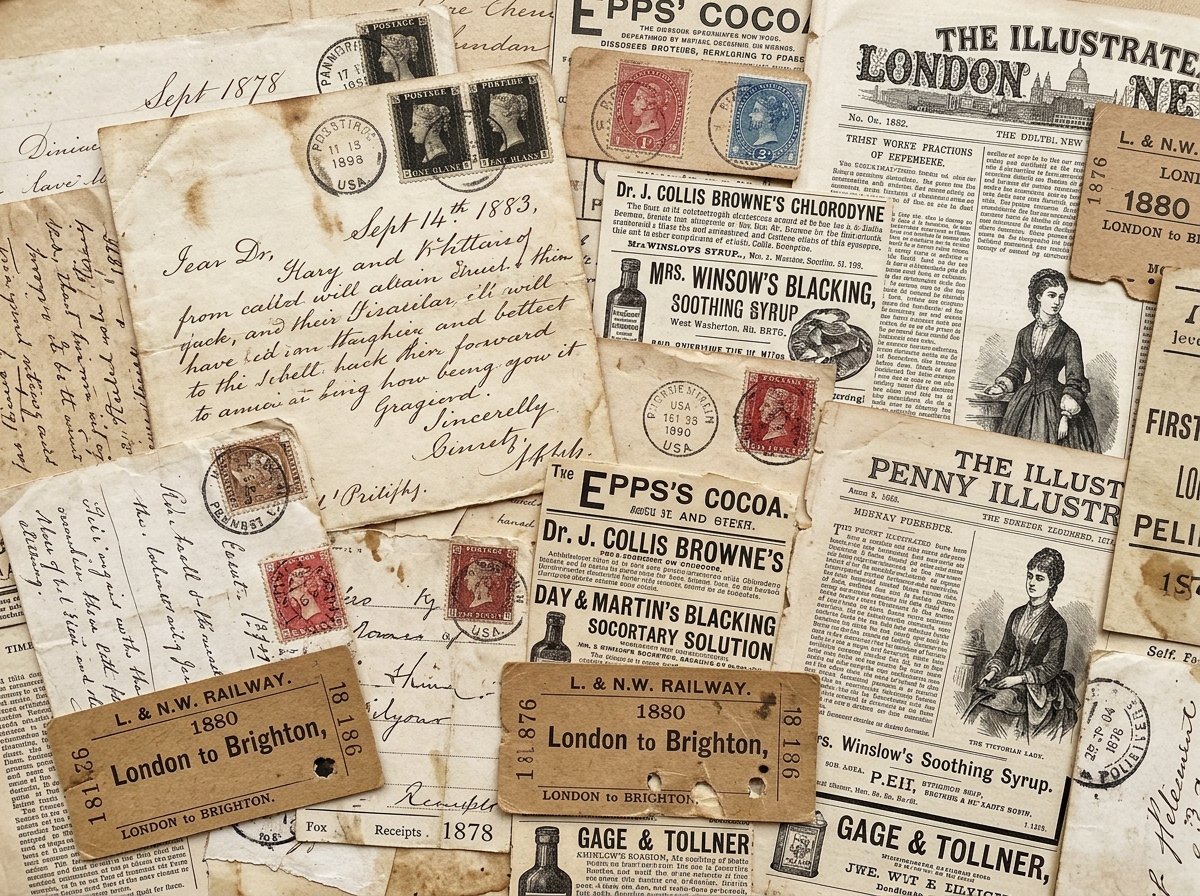
A lot is only a bargain if most of it is usable. Here is how to tell before you pay.
Vintage paper lots are seductive: a box of old cards, letters, tickets and photographs for one price, photographed in soft light. Then it arrives, and half of it is damp, foxed, taped together or not what the photo suggested. The fix is not cynicism — it is a checklist. Twelve points, five minutes per lot, and a much better hit rate.
## The 12-point checklist
1. **Photos of the actual lot.** Stock images, cropped views or "similar items" mean you are buying a category, not a collection. Ask for a flat-lay of everything included;
2. **Damp and mould.** Dark spots, a musty smell, buckled sheets and staining at the edges are warning signs. Mould spreads to clean paper;
3. **Foxing vs dirt.** Small brown age spots are usually acceptable; greasy dirt, water tides and pest debris are not;
4. **Insect damage.** Holes, frass (tiny droppings), larvae casings and chewed edges mean the lot needs quarantine;
5. **Tears and missing pieces.** Small edge tears are often fine; missing corners, split folds and cut-outs change what the item is;
6. **Fading and light damage.** Compare the front and back of cards; strong fading suggests long sun exposure and is irreversible;
7. **Tape and adhesive residue.** Yellowed tape, glue stains and "repairs" are difficult to reverse and can damage neighbouring paper;
8. **Smell.** Ask directly: "Does it smell musty or of smoke?" A seller who has handled the lot will know;
9. **Completeness.** For sets and series, check whether pages, cards or envelopes are missing; incomplete sets are worth less than the sum of parts;
10. **Provenance.** A name, date, album or collector's note adds context and value; anonymous lots are fine but priced accordingly;
11. **Usable yield.** Estimate how many pieces you will actually use. A box of 200 with 30 good pieces is a 30-piece purchase;
12. **True cost.** Add shipping, customs, duplicates and your time sorting. The cheapest lot is rarely the best value.
## Five questions to ask the seller
* Can you send a photo of the full lot, including the back of the cards?
* Has it been stored in a dry, smoke-free space?
* Are there any signs of mould, damp or insects?
* Is anything trimmed, glued, taped or missing?
* Where did the lot come from — house clearance, estate sale, dealer?
Good sellers answer these without irritation. Evasive answers are information too.
> **Red flags:** "Craft lot" with no close-ups; "as found" with no condition notes; prices far below market for rare-looking material; photos that show only the best three items; pressure to buy before you ask questions.
## After the lot arrives
1. **Quarantine:** keep it away from your collection for a few days;
2. **Inspect in daylight:** check for mould, insects and damp;
3. **Dry if needed:** air-dry slowly, away from direct heat;
4. **Clean gently:** soft brush for loose dust; do not wet-clean old paper without experience;
5. **Sort:** keep, scan, use in journals, donate or recycle;
6. **Record:** photograph the lot and note provenance before it disperses.
## Buying strategy that works
Start with small, well-photographed lots from sellers who describe condition honestly. Buy for a specific project rather than "someday". Learn one category deeply — postcards, trade cards, tickets — and you will spot value faster than a generalist. And remember that the best lots are often the least glamorous: a box of ordinary receipts can be more useful for journaling than a single expensive showpiece.
The checklist is not about avoiding risk; it is about pricing it. Once you can see what a lot actually contains, you can decide whether the story is worth the paper.
---
*Related: <a href="/blog/why-old-paper-smells/">why old paper smells</a> · <a href="/blog/paper-science-sizing-acidity/">how paper ages</a> · <a href="/blog/collection-name-patterns/">collection naming</a>.*