Wedding Ephemera Through the Decades (and How to Journal It)
By Ephemera Crafts Atelier
•
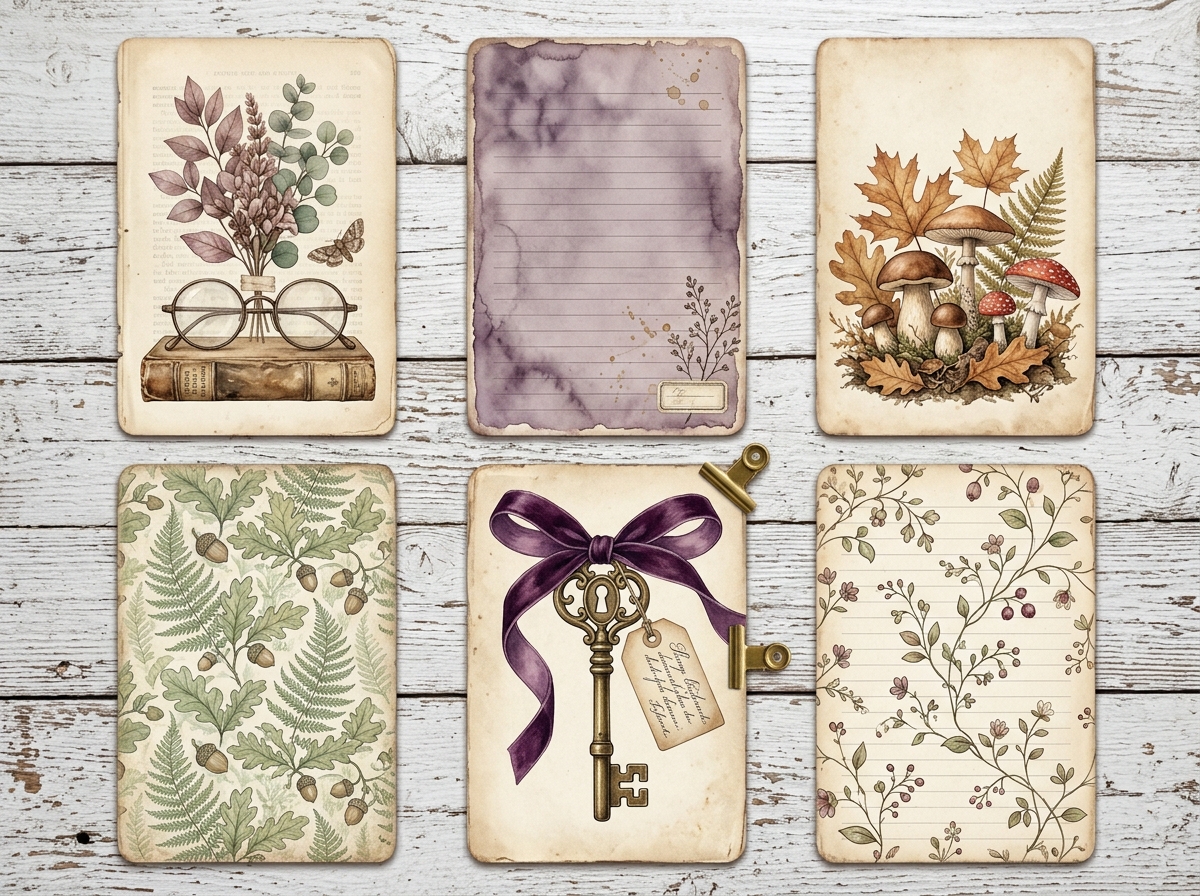
A wedding produces a paper trail: an invitation, a menu, a programme, a place card. Together they are a portrait of taste, money and family.
Weddings are ephemeral by design: one day, one ceremony, one party. But they leave behind a surprising amount of paper — invitations, reply cards, menus, programmes, place cards, favours, napkins, confetti packets, sometimes a newspaper announcement. Individually these objects are modest. Together they document a social world: who was invited, what was served, how the day was staged, what the couple could afford, and what "good taste" meant at that moment.
## What a wedding paper trail contains
* **Invitations** — the central document: names, venue, date, dress code, typography, paper quality;
* **Reply cards and envelopes** — the guest list in action, often with handwritten names;
* **Menus** — food, drink, language, printing style;
* **Programmes and orders of service** — rituals, readings, music, participants;
* **Place cards and table plans** — social seating made visible;
* **Favours and packaging** — small printed objects designed to be taken home;
* **Announcements and photographs** — the public and private record of the day.
## How the paper changed
Nineteenth-century formal weddings relied on engraved invitations and calling-card conventions; the paper was thick, the typography restrained, the wording highly prescribed. Through the twentieth century, printing became cheaper and weddings more varied: letterpress gave way to offset, then to desktop publishing and DIY design. Mid-century invitations often reflect the graphic styles of their moment; recent decades have seen a revival of letterpress, handmade paper and highly personal design.
The changes are visible in the objects: paper weight, ink, typeface, illustration, even the size of the envelope. A collection of wedding invitations from different decades is a small history of commercial design.
## Reading a wedding invitation
Look beyond the names. The wording tells you who hosted, which family was being represented, and what relationship the couple had to tradition. The venue tells you about scale and setting. The printing tells you about budget and taste. The reply card tells you how guests were managed. Even the envelope — lined, printed, hand-addressed — is part of the message.
For family historians, these details can confirm dates, relationships and social networks. For designers, they are a lesson in restraint and hierarchy. For journalers, they are ready-made material with built-in emotional weight.
> **Privacy first:** Wedding ephemera often contains the full names, addresses and personal details of living people. Before using it in a public project or selling it, anonymise names and addresses, or use reproductions with details obscured.
## Making a wedding or anniversary journal
Paper is the traditional first-anniversary gift — which makes a handmade paper journal an unusually fitting present. A simple structure works best:
1. **Cover:** use a reproduction of the invitation as the cover, or a plain linen cover with a printed label;
2. **Opening spread:** the invitation, a photo, and the date;
3. **Middle pages:** one spread per element — menu, programme, place card, a favourite photo;
4. **Pockets:** keep the reply card, a dried flower, a piece of ribbon, a confetti packet;
5. **Closing page:** a letter to the couple, dated and signed.
Keep the palette close to the wedding's own colours, and let the paper do most of the work. Our [folio kits](/category/folios/) and [ephemera collections](/category/ephemera/) are designed for this kind of layered, personal project; the [mini journal tutorial](/blog/mini-junk-journal-from-one-printable-kit/) covers the binding.
## Collecting wedding ephemera
Wedding lots turn up at estate sales, paper fairs and online auctions. Look for complete sets (invitation, reply card, envelope, menu), clear dates and provenance. Condition matters, but context matters more: a creased invitation with a handwritten guest name can be more evocative than a pristine blank. Store paper flat, away from light, and scan before using originals in a journal.
In the end, wedding ephemera is about a single day that was designed to be remembered. The paper is how the day survives — not as a photograph only, but as an object you can hold, open and read again.
---
*Related: <a href="/blog/lost-art-of-letter-writing/">the lost art of letter writing</a> · <a href="/blog/victorian-calling-cards-ephemera/">Victorian calling cards</a> · <a href="/blog/paper-time-capsule/">the paper time capsule</a>.*