Why Old Paper Smells Like That: A Gentle Chemistry
By Ephemera Crafts Atelier
•
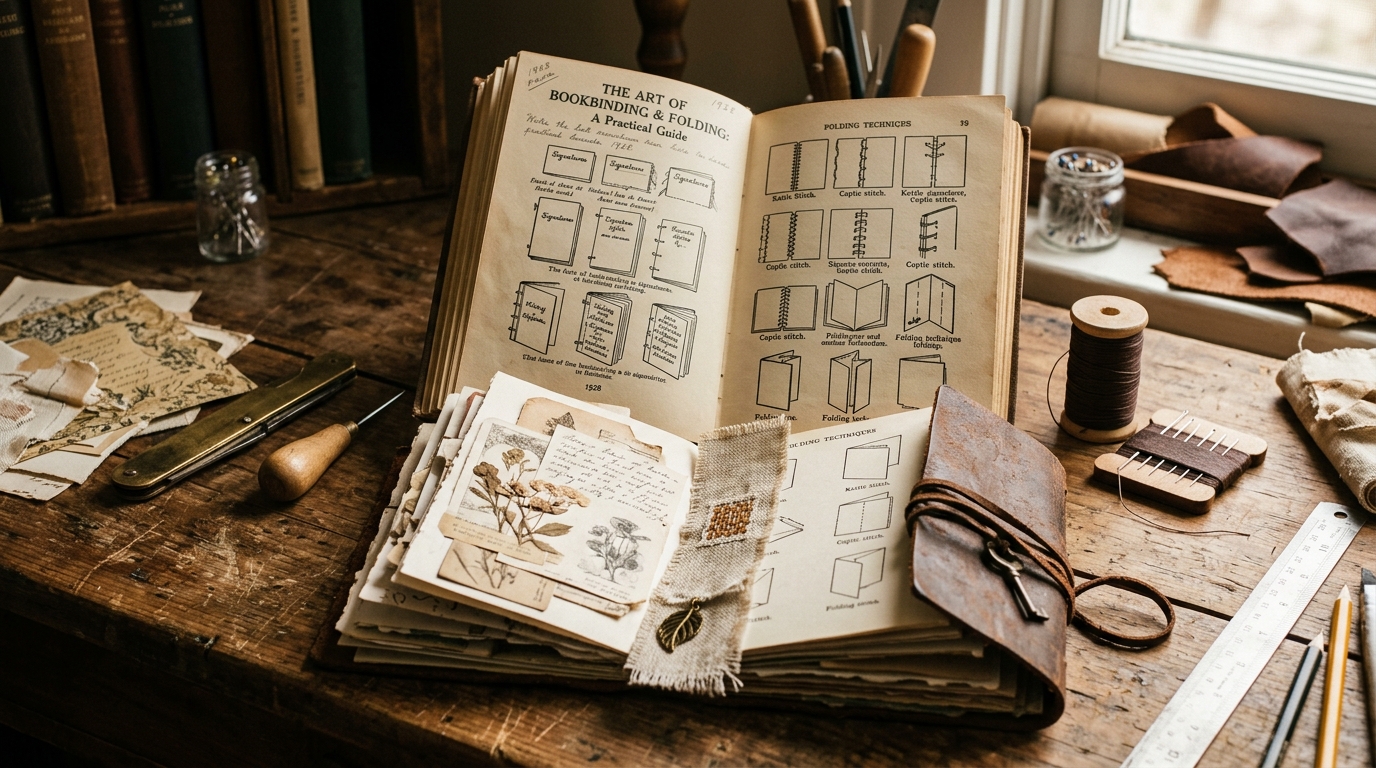
The scent of an old book is chemistry you can smell — and occasionally a warning you should heed.
Open an old book and the room changes. The smell is warm, dry, faintly sweet — sometimes dusty, sometimes sour. It is one of the most recognisable sensory experiences in paper culture, and it is also a small chemical report on what the paper is doing. Understanding it helps collectors store books well, helps journalers avoid damaged material, and explains why a library smells like memory.
## What you are actually smelling
Paper is mostly cellulose, with lignin, sizing agents, coatings and fillers. As it ages, these materials break down and release volatile organic compounds — molecules that evaporate into the air and reach your nose. The mix depends on the paper, the ink, the binding and the storage conditions, which is why no two old books smell exactly alike.
* **Sweet, vanilla-like notes** — largely from the breakdown of lignin, which releases vanillin and related compounds. This is the classic "old book" smell;
* **Acidic, vinegar-like notes** — a sign of acid hydrolysis, where paper molecules are breaking down; a strong sour smell suggests advanced degradation;
* **Musty, earthy notes** — usually mould or damp. This is the one to take seriously;
* **Chemical or smoky notes** — inks, adhesives, leather bindings, dust and environmental residue;
* **Dust and paper fibre** — the dry, papery base note underneath everything else.
## Why old books smell stronger than old paper
A closed book traps volatile compounds inside its pages; when you open it, they release in a concentrated puff. A single sheet has no such enclosure, so its smell dissipates quickly. This is also why a used bookshop has a collective smell — thousands of books quietly outgassing into one space.
## Smell as a diagnostic
For collectors and journal makers, smell is a quick health check:
* **Sweet and dry:** normal aging; usually safe to handle and store;
* **Strong vinegar:** paper is degrading faster than it should; handle gently, store dry and cool, avoid sealing it in airtight containers;
* **Musty or damp:** moisture and likely mould. Isolate the item, dry it slowly, and do not put it in a journal with other paper until it is stable;
* **Chemical or solvent:** adhesives, ink or cleaning products; ventilate and avoid inhaling closely.
> **Do not mask a smell:** Perfume, cedar blocks and scented sachets add new chemistry to paper and can stain or attract pests. If an item smells musty, fix the cause — damp storage — rather than covering the symptom.
## Mould: the line between charming and risky
Mould spores are a health risk, especially for people with allergies or respiratory conditions. A faint mustiness may only require airing and drying; visible mould, dark spots or a persistent damp smell means the item should be isolated and assessed before it goes anywhere near a journal. When in doubt, do not use it — and never store mouldy paper in a closed box with clean paper.
## Why the smell feels so nostalgic
Smell is processed close to the brain's memory and emotion systems, which is why a scent can trigger a vivid recollection faster than a photograph. For many people, the smell of old paper is tied to libraries, childhood books, family attics or second-hand shops. That emotional charge is part of why paper feels different from a screen: it engages the senses in a way that is difficult to digitise.
## Storing paper so it smells right
* Keep paper dry, cool and ventilated; avoid attics, basements and sealed plastic in humid climates;
* Allow air circulation around stored books and journals;
* Use acid-free boxes and folders for long-term storage;
* Keep food, drink and pests away from paper;
* If an item smells damp, dry it slowly and separately before returning it to the collection.
The smell of old paper is a reminder that books and journals are not static objects. They are slowly changing materials, and their scent is part of their biography. Learn to read it, and you will know which paper is aging gracefully — and which needs your help.
---
*Related: <a href="/blog/paper-science-sizing-acidity/">sizing, acidity and aging</a> · <a href="/blog/what-is-ephemera/">what ephemera is</a> · <a href="/blog/texture-therapy-tactile-paper/">texture therapy</a>.*