Zero-Waste Journaling: Using Every Scrap
By Ephemera Crafts Atelier
•
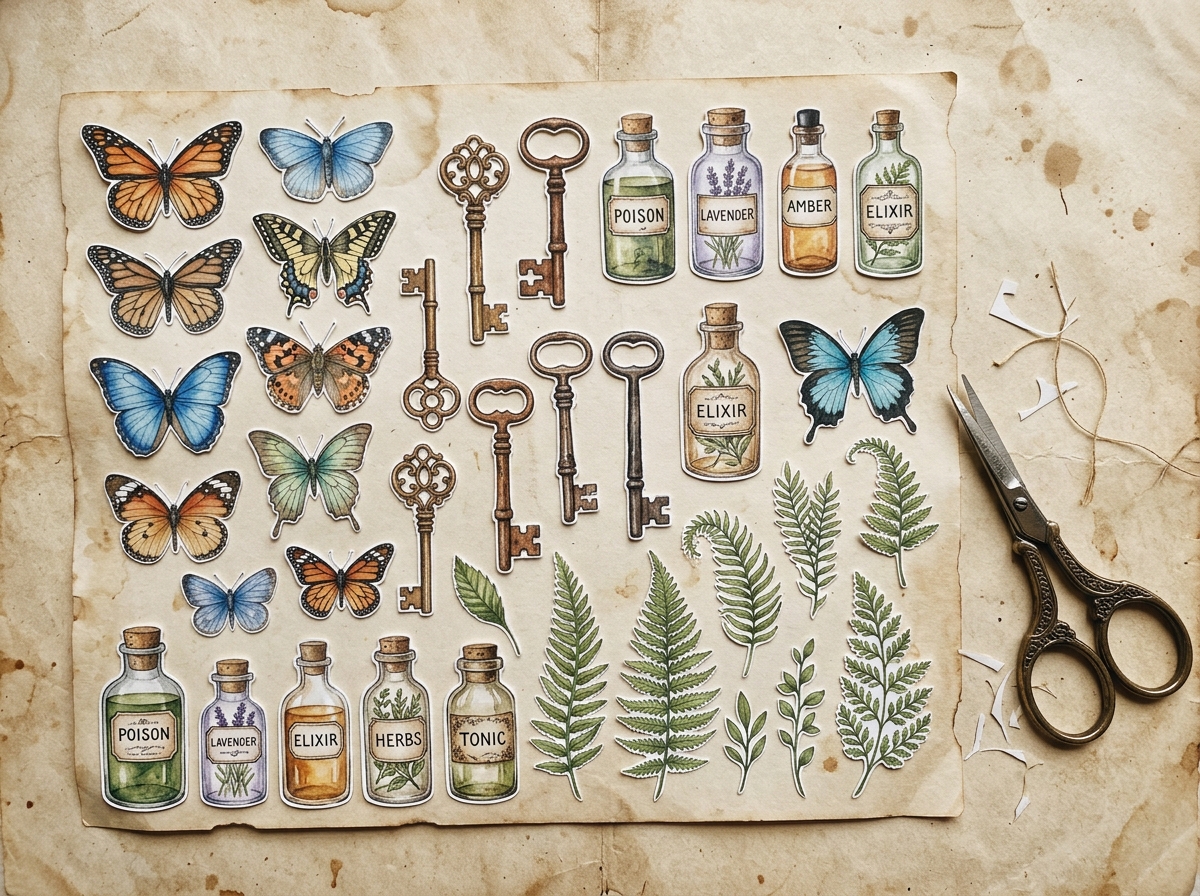
The most sustainable paper is the paper you already own — if you can find it and use it.
Every journal maker knows the drawer: a growing collection of offcuts, misprints, trimmed edges and "too good to throw away" pieces. Zero-waste journaling is not about guilt or perfect recycling. It is about turning that drawer into a usable material library — and knowing when to stop keeping things you will never use.
## What counts as scrap
* **Offcuts** from trimming pages, pockets and covers;
* **Test prints** and misprints — often perfectly usable on one side;
* **Trimmed edges** of patterned paper;
* **Packaging** with interesting print, texture or colour;
* **Damaged pages** that still have good sections;
* **Small leftovers** from fussy cuts and die-cut sheets.
## Sort once, use often
A simple three-box system prevents both chaos and hoarding:
1. **Use now:** pieces large enough for tags, pockets, tabs or collage, sorted by colour family;
2. **Use later:** small or unusual pieces with a clear future use (confetti, mosaic, envelope liners);
3. **Recycle:** damaged, dirty or uninspiring pieces that you keep only out of guilt.
Review the "use later" box every few months. If a piece has survived two reviews without being used, it is not a supply — it is storage.
## Ten ways to use the smallest pieces
* **Confetti:** punched shapes for shaker pockets and gift envelopes;
* **Mosaic backgrounds:** glue small pieces edge to edge for a patchwork page;
* **Tags:** offcuts become small tags with a punched hole and a string;
* **Tabs:** thin strips folded over a page edge;
* **Pocket accents:** a patterned strip along a pocket mouth;
* **Envelope liners:** scraps make ordinary envelopes look considered;
* **Bookmarks:** long offcuts laminated or backed with card;
* **Tiny collage:** a cluster built entirely from scraps;
* **Filler pages:** a mosaic page between heavier spreads;
* **Gift wrap details:** a small label or band on a parcel.
> **Print efficiently:** When printing, impose several small elements on one sheet rather than printing them one at a time. Keep a "scrap sheet" file with tags, labels and tabs sized to fit the gaps — it turns every print run into a small supply run.
## Use the scrap as a design constraint
Some of the best pages come from limits: "make a spread using only what is in this box". A scrap palette forces colour cohesion, encourages layering, and produces pages that look collected rather than shopped. Try a monthly "scrap-only" spread — it is both a sustainability practice and a design exercise.
## When to let go
Zero waste does not mean keeping everything. Paper that is mouldy, dirty, pest-damaged or simply uninspiring should be recycled. The goal is a working library, not a landfill in a drawer. A useful rule: if you would not choose it for a page today, and it has no specific project attached, let it go.
Zero-waste journaling is less about saving the planet one offcut at a time — though that helps — and more about respecting material. Paper already carries a history; using it fully is a way of continuing that history instead of ending it in the bin.
---
*Related: <a href="/blog/creative-ways-to-use-printable-ephemera/">12 ways to use printable ephemera</a> · <a href="/blog/nine-spread-layouts/">nine spread layouts</a> · <a href="/blog/ethics-cutting-old-books/">the ethics of cutting old books</a>.*